
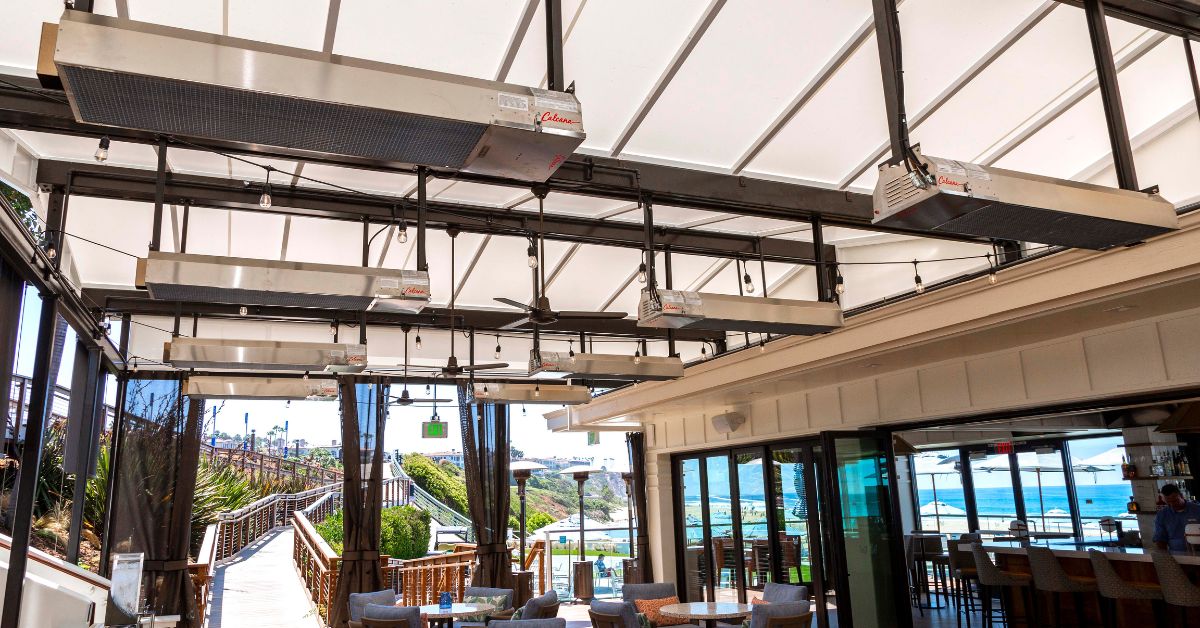
If you own a business with frequently used outdoor spaces, you want to ensure your customers are comfortable and get the best experience possible. However, keeping these spaces warm and pleasant during cooler months can be a challenge.
Restaurants, breweries, hotels, event venues, cafés, resorts, and other businesses increasingly rely on outdoor patios and gathering areas to accommodate customers. These spaces can provide additional seating, improve the atmosphere of a business, and give customers an opportunity to enjoy fresh air while dining, socializing, or relaxing. But when temperatures begin to fall, outdoor spaces can quickly become uncomfortable without an effective heating solution.
To combat these complications, infrared heaters are changing the way businesses utilize outdoor spaces. They offer an efficient and effective solution for extending the usability of patios and other exterior areas throughout the year. Rather than attempting to heat the entire volume of outdoor air, infrared technology delivers radiant warmth directly to people and objects within the heater's range.
This makes infrared heating particularly useful for outdoor environments, where conventional heating methods can struggle with constantly moving air and changing weather conditions.
Find out the benefits of infrared heating for outdoor spaces and how you can properly integrate these systems for your customers.
Why Infrared Heating Is Perfect for Outdoor Areas: Creating Comfortable, Efficient Outdoor Spaces Year-Round
When it’s cold outside, your customers are less likely to dine on your patio or experience other outdoor areas at your business. Even a beautifully designed patio can sit unused when temperatures become uncomfortable. Instead of allowing cold weather to eliminate an important part of your business, installing an appropriate outdoor heating system can help you continue using these spaces.
Infrared heaters use radiation to generate heat. It’s a natural and safe process where electromagnetic waves transfer energy to objects. The warmth produced is similar to the heat you feel from the sun, but without harmful UV rays. This works well for colder climates or windy days when your customers want to relax in your outdoor space.
The core principle behind infrared heating lies in its ability to directly warm up surfaces, which absorb and retain heat much more effectively than air. Rather than relying on heated air that can quickly dissipate in an outdoor environment, infrared heaters provide radiant energy directly to the people and objects within the heating zone.
This unique approach makes infrared heating highly effective in open areas with consistent airflow.
For example, imagine a restaurant patio on a cool evening. A conventional forced-air heater may warm the air immediately around the unit, but a breeze can quickly carry that heated air away. An infrared heater takes a different approach. Instead of trying to maintain a pocket of warm air, it directs radiant energy toward the people sitting beneath or in front of the heater.
This allows businesses to create comfortable heating zones without attempting to heat the entire outdoor environment.
Understanding how infrared heating works can help explain why it performs differently from conventional heating equipment.
Traditional heating systems generally depend on convection. The heater warms air, and that warm air circulates through a space. This can work effectively in enclosed buildings where walls, ceilings, doors, and windows help contain the heated air.
Outdoor spaces don't offer the same advantage.
There is no ceiling trapping warm air above a patio and no enclosed room preventing heated air from escaping. Wind and natural air movement can quickly disrupt the temperature around customers.
Infrared heating avoids much of this challenge by transferring heat directly to surfaces and people.
When infrared energy reaches a person, table, chair, floor, wall, or other surface, that energy is absorbed and converted into heat. Instead of depending entirely on the surrounding air temperature, the occupants within the heating zone can feel the warmth directly.
This is one of the primary reasons infrared technology is so useful for outdoor applications.
The goal isn't necessarily to make the entire outdoor environment warm. Instead, the objective is to create comfortable areas where people actually spend time.
Energy Efficiency & Cost Savings
Efficient energy usage allows business owners to properly manage operational costs. If you want to reduce unnecessary energy consumption while keeping customers comfortable, infrared heaters can provide an effective approach to outdoor heating.
Using Energy Wisely
Unlike traditional outdoor heaters that attempt to disperse heat widely, infrared heaters concentrate their energy where it’s needed most.
This focused distribution means less energy can be wasted heating unoccupied portions of the outdoor environment. Instead, businesses can position heaters over seating areas, along patios, near entrances, or in other locations where customers and employees spend their time.
Consider a restaurant with a large patio.
If the patio has 30 tables but only 10 are occupied on a particular evening, heating the entire patio may not be necessary. With strategically positioned infrared heaters, the business can create specific heating zones around occupied areas.
This approach allows businesses to adapt their heating strategy to actual customer usage.
Heating Zones Can Improve Efficiency
One of the major advantages of infrared heating is the ability to create zones.
Instead of treating an entire patio as one heating area, businesses can divide the space into several zones based on seating arrangements and traffic patterns.
For example, a restaurant could have one heating zone around its main dining area, another around a bar section, and another near an outdoor waiting area.
Each zone can be managed according to the needs of that particular area.
This can be especially valuable for businesses with large patios or outdoor spaces that aren't consistently occupied.
Adding Up Savings
The initial investment in high-quality infrared heaters can provide long-term value. Reduced energy waste, targeted heating, and durable equipment can contribute to lower overall operating expenses.
Businesses should consider more than simply the purchase price of a heater when comparing heating systems. The total cost of ownership can also include energy consumption, maintenance, repairs, installation, replacement parts, and equipment lifespan.
A heating system that requires significant ongoing maintenance or consumes large amounts of energy may ultimately cost more than its initial price suggests.
Infrared heating provides businesses with another option to consider when evaluating these long-term expenses.
Comfort & Customer Experience
To keep customers coming back, the ambiance of your outdoor space matters just as much as the quality of your service. A patio can become an extension of your business's identity, giving customers a memorable environment where they can eat, drink, socialize, or relax.
Temperature plays a major role in whether customers actually want to use that space.
Even Heat Coverage
Many outdoor areas may have cold spots that are difficult to control without proper equipment. Poor heater placement can leave some tables warm while others remain uncomfortable.
Infrared heaters can be strategically positioned to create more consistent heating zones.
Rather than simply placing a heater wherever there is available space, businesses should consider how customers move through the area and where people are most likely to sit.
Mounting height, heater orientation, seating arrangement, and the overall patio design can all influence how effectively radiant heat reaches occupants.
A professional assessment can help determine the appropriate placement for a particular space.
Improved Dining & Relaxation
Customers appreciate outdoor spaces that give them a chance to comfortably enjoy scenic views of nearby businesses or nature.
By maintaining comfortable conditions, infrared heating allows patrons to focus on enjoying their meals, conversations, and the unique ambiance of your business's outdoor space.
For restaurants, this can be particularly valuable.
A customer who would normally move indoors because of cold weather may be more willing to remain outside when radiant heat is available. A comfortable patio can also become an attractive feature for customers specifically looking for an outdoor dining experience.
Extend the Patio Season
One of the biggest benefits of outdoor heating is the ability to extend the amount of time a patio can be used each year.
Without heating, many patios become seasonal spaces that are heavily dependent on weather.
With a properly designed infrared heating system, businesses can potentially begin using outdoor areas earlier in the spring and continue using them later into the fall.
In colder climates, heating can make the difference between an outdoor area sitting empty and becoming a productive part of the business.
Installation Flexibility & Practicality
Every outdoor space is unique, so it’s important to invest in a heating solution that adapts to your specific layout and will be easy to manage and maintain after installation.
One of the benefits of infrared heating systems for outdoor spaces is their installation flexibility.
Multiple Mounting Options
Many store or restaurant owners mount their infrared heaters on walls or ceilings or integrate them into existing structures such as pergolas or awnings.
This adaptability incorporates your heating system seamlessly into the design of your space.
Depending on the property, heaters may be positioned above seating areas, along walls, beneath covered structures, or in other appropriate locations.
The specific mounting method will depend on the heater model, available structure, clearance requirements, and manufacturer's installation instructions.
Target High-Traffic Areas
Businesses don't necessarily need to distribute heaters evenly throughout an outdoor area.
Instead, heating equipment can be positioned strategically around the areas that matter most.
These could include:
-
Outdoor dining areas
-
Bar seating
-
Customer waiting areas
-
Entranceways
-
Covered patios
-
VIP seating sections
-
Event spaces
-
Employee gathering areas
-
Hospitality areas
Strategic placement can help maximize the value of the heating system while minimizing unnecessary energy use.
Space-Saving Design
Unlike bulky traditional heaters that can obstruct pathways or take up valuable floor space, many infrared models can be mounted overhead or on walls.
This allows businesses to maximize available seating while maintaining a clean and organized patio.
Floor space is especially valuable for restaurants and hospitality businesses. Every table, chair, walkway, and service area needs to be carefully considered.
Mounting heaters above customers removes equipment from the floor and keeps pathways clear.
Durability & Longevity
Investing in durable, high-quality equipment prevents business owners from experiencing unnecessary damage or downtime with their heating systems.
Outdoor equipment needs to withstand conditions that indoor heating systems generally don't encounter.
Weather Resistance
Outdoor infrared heaters are designed for applications where environmental exposure needs to be considered.
Depending on the installation and product specifications, heaters may encounter wind, rain, snow, humidity, dust, and changing temperatures.
Choosing equipment designed for the intended environment is therefore essential.
Businesses should always confirm that their selected heater is appropriate for the specific outdoor application and follow all manufacturer installation and operating requirements.
Long-Lasting Performance
With proper installation and maintenance, high-quality infrared heaters can provide reliable performance over many seasons.
Routine inspections can help identify issues before they become larger problems. Businesses should periodically inspect accessible components, mounting hardware, wiring where applicable, and surrounding areas.
Cleaning accumulated dust and debris can also help maintain the heater's performance.
A preventative maintenance program is particularly useful for commercial businesses that rely heavily on their outdoor heating systems.
Safety Features & Proper Installation
Running a business involves preserving the safety of your staff and patrons. As a solution, properly selected and installed infrared heating systems can provide warmth without compromising the usability of the outdoor environment.
Mounting heaters securely and maintaining appropriate clearances from combustible materials are important parts of safe operation.
For commercial installations, professional installation can provide additional confidence that the equipment is mounted appropriately and connected according to applicable requirements.
Businesses should also avoid placing objects, decorations, furniture, umbrellas, awnings, or other materials too close to the heater.
Always follow the manufacturer's clearance requirements rather than relying on a general rule of thumb.
Keep Heaters Out of Reach
Mounting heaters above the seating area can provide both practical and safety advantages.
Customers are less likely to accidentally contact a hot surface when the equipment is properly positioned overhead.
This is especially important in busy environments where people are constantly moving between tables, entrances, bars, and service areas.
Infrared Heating for Restaurants & Patios
Restaurants are among the businesses that can benefit significantly from outdoor infrared heating.
Patios provide additional seating and create an appealing dining environment, but customers generally won't want to sit outside if they're uncomfortable.
Infrared heating gives restaurants another tool for making outdoor seating viable during cooler weather.
A restaurant can strategically position heaters above dining areas and adjust its heating strategy depending on customer occupancy and weather conditions.
The same concept applies to breweries, cafés, pubs, hotels, and other hospitality businesses.
Infrared Heating for Breweries & Social Spaces
Breweries and other social venues often use outdoor spaces as extensions of their indoor environments.
Customers may spend several hours socializing, eating, and enjoying beverages outside. Maintaining comfortable conditions can encourage guests to stay longer and make greater use of the available space.
Infrared heaters can help create designated warm zones without requiring the business to enclose the entire patio.
This can preserve the open-air atmosphere while making the space more comfortable during cooler evenings.
Infrared Heating for Hotels & Resorts
Hotels and resorts often use outdoor spaces as part of their guest experience.
Outdoor lounges, patios, restaurants, poolside areas, balconies, and event spaces can all benefit from appropriate heating solutions.
For hospitality businesses, comfort and presentation are especially important.
A heater that integrates neatly into the architecture can provide warmth without detracting from the appearance of the space.
Strategic placement can also help hotels make better use of outdoor areas during shoulder seasons when temperatures aren't consistently warm.
Designing Your Outdoor Space Around Heating
Installing heaters shouldn't necessarily be an afterthought.
When designing or renovating an outdoor space, consider heating from the beginning.
Think about where customers will sit, where furniture will be located, how people will move through the area, and where appropriate mounting points are available.
For example, a restaurant designing a new patio could position tables underneath suitable mounting locations, allowing heaters to be integrated into the design rather than added later.
This approach can make the final installation cleaner and potentially improve heating coverage.
Consider Wind & Outdoor Conditions
Outdoor heating always needs to account for environmental conditions.
Wind can affect how customers perceive warmth and can influence how effectively a heating system performs.
Infrared heating has an advantage because radiant energy isn't simply carried away in the same manner as heated air. However, the design and positioning of the system still matter.
Businesses should consider prevailing wind direction, surrounding buildings, patio walls, awnings, landscaping, and other structures when planning heater placement.
A thoughtful layout can help create more comfortable outdoor zones.
Maintenance for Outdoor Infrared Heaters
Outdoor heaters should be inspected regularly to ensure they remain in good operating condition.
Dust, pollen, insects, leaves, and other debris can accumulate on equipment over time.
Cleaning requirements vary depending on the heater model and application, so always follow the manufacturer's instructions.
Businesses should also inspect mounting hardware and surrounding structures periodically.
If a heater appears damaged, produces unusual sounds or odors, or isn't performing as expected, discontinue use as appropriate and contact a qualified professional.
Routine maintenance can help prevent small issues from becoming major problems during the busiest part of the outdoor season.
Making the Most of Your Outdoor Space
The value of an outdoor area extends beyond simply providing additional square footage.
A well-designed patio can become an important part of the customer experience.
It can offer scenic views, fresh air, additional seating, social opportunities, and an atmosphere that customers can't get from sitting indoors.
However, these advantages disappear when temperatures become uncomfortable.
Infrared heating helps businesses overcome one of the biggest limitations of outdoor spaces: cold weather.
By providing targeted radiant warmth, businesses can create more comfortable environments without attempting to heat the surrounding atmosphere.
This can help transform a seasonal patio into a more versatile space that customers can enjoy for a larger portion of the year.
Choosing the Right Infrared Heater for Your Outdoor Space
Not every infrared heater is appropriate for every outdoor application.
Before purchasing a system, consider the size and layout of the area, available mounting locations, desired heating zones, environmental conditions, energy source, and applicable installation requirements.
It's also important to consider how customers will use the space.
A restaurant with fixed tables may require a different configuration than an event venue with flexible seating.
Similarly, a small café patio may have very different heating requirements than a large hotel terrace.
Working with heating professionals can help businesses determine which equipment and installation approach makes the most sense for their specific application.
Create a More Comfortable Outdoor Experience With Calcana
Outdoor spaces give businesses an opportunity to provide customers with something special, but cold temperatures can quickly make these areas uncomfortable.
Infrared heating provides an efficient and flexible way to address this challenge.
Instead of relying on heated air that can quickly disappear into the surrounding environment, infrared technology delivers radiant warmth directly to people and objects within designated heating zones.
The result can be a more comfortable patio, improved customer experience, better use of available space, and the opportunity to extend outdoor operations into cooler seasons.
From restaurants and breweries to hotels, event venues, commercial patios, and other outdoor spaces, infrared heating can provide an effective solution for businesses that want to get more from their exterior areas.
To get the most out of your outdoor space, find a hanging outdoor heater that can provide warmth to your patrons during chilly days. At Calcana USA, we provide high-quality infrared heaters, mounting materials, and accessories designed to support a wide variety of heating applications.
Don't let cooler temperatures put your outdoor space on hold. Contact Calcana today to explore an infrared heating solution for your business and create a comfortable environment your customers can enjoy for more of the year.


Leave a comment
This site is protected by hCaptcha and the hCaptcha Privacy Policy and Terms of Service apply.