
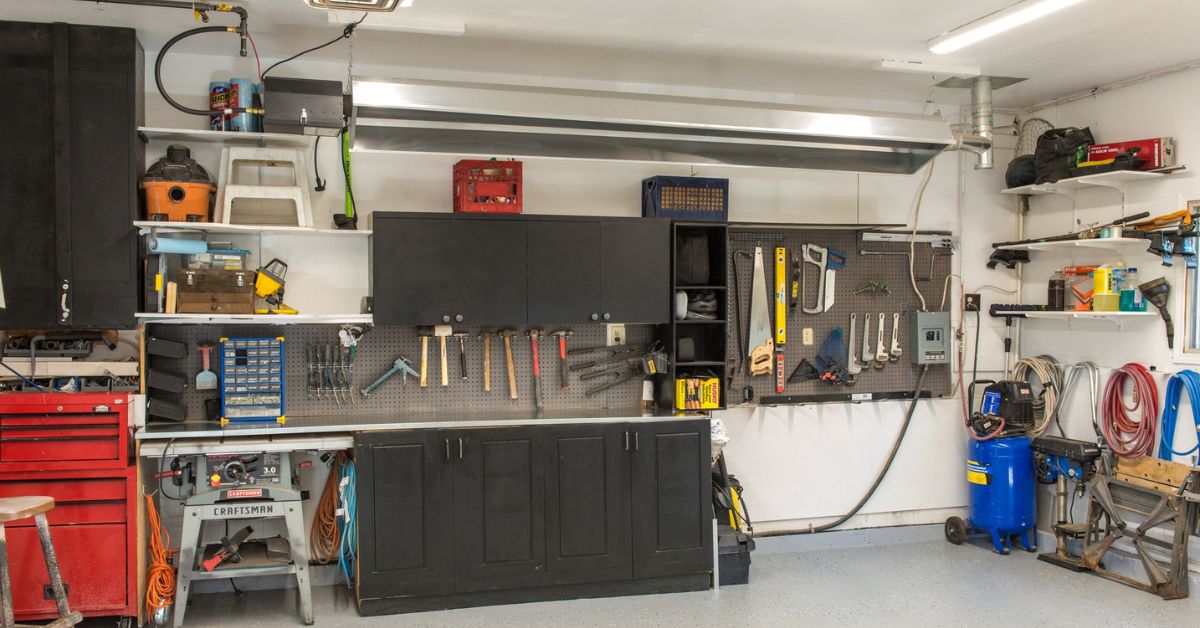
Whether your garage functions as a workspace, home gym, storage area, or all of the above, maintaining a consistent and comfortable temperature plays a critical role in how usable that space is year-round. As temperatures fluctuate, especially in colder climates, infrared heaters have become a preferred solution for homeowners looking to heat garages efficiently without wasting energy.
Unlike traditional heating systems, infrared heaters provide direct, targeted warmth that isn’t easily lost to air movement. This makes them highly effective in garages, which are often less insulated than the rest of the home and subject to drafts, opening doors, and fluctuating conditions.
However, performance is only part of the equation. Proper placement is what determines whether your heating system is not only effective, but also safe. One of the most common and important questions homeowners ask is: how close can an infrared heater be placed to surrounding objects?
The answer isn’t one-size-fits-all. It depends on your garage layout, the materials in the space, the type of heater you’re using, and how heat is distributed. Understanding these variables ensures your system operates efficiently while protecting both your property and the people using the space.
Why Proper Heater Clearance Matters for Safety, Performance, & Long-Term Protection in Garage Spaces
Infrared heaters work by emitting radiant heat that travels in a straight line until it’s absorbed by a surface. This means anything within that path, tools, walls, shelving, or even vehicles, will absorb heat directly.
While this is what makes infrared heating so effective, it also introduces the need for careful spacing. If objects are placed too close, heat can accumulate quickly, leading to potential damage or safety hazards.
Improper clearance can result in warped materials, discoloration, reduced equipment lifespan, or in extreme cases, fire risks. Even if immediate damage isn’t visible, repeated exposure to high heat over time can weaken materials and create long-term issues.
Maintaining proper distance allows heat to disperse evenly, creating a comfortable environment without concentrating excessive heat in one area.
Consider the Structure of Your Garage
Before determining heater placement, it’s important to evaluate the structure of your garage. No two garages are exactly alike, and factors such as size, layout, ceiling height, and construction materials all influence how heat behaves within the space.
A smaller, enclosed garage will retain heat more easily, while a larger or more open space may require more strategic placement to achieve consistent warmth. Ceiling height is particularly important, as it affects how heat radiates downward and spreads throughout the area.
By understanding the physical characteristics of your garage, you can make informed decisions about where to position your heater and how much clearance is required.
The Space Between Walls & Heaters
Walls are one of the most important considerations when installing an infrared heater. Because radiant heat travels directly outward, walls can absorb a significant amount of energy if the heater is placed too close.
Most manufacturers recommend maintaining a minimum clearance of 36 to 48 inches between the heater and any wall surface. Calcana has a lower clearance than most heaters on the market with as little as 4" to 15" from the wall depending on the model and the mounting angle. This distance allows heat to spread effectively without concentrating on a single area.
If a heater is mounted too close to a wall, heat buildup can lead to gradual wear, discoloration, or even structural damage over time. Paint may fade, drywall can weaken, and certain materials may become brittle with prolonged exposure.
Proper spacing not only protects your garage structure but also improves overall heating performance by allowing heat to distribute more evenly.
The Role of Garage Materials
Not all materials respond to heat in the same way. Understanding how different surfaces react to infrared heat is essential when determining safe placement.
Wood, for example, is more sensitive to heat than concrete or metal. Prolonged exposure can cause it to dry out, crack, or in extreme cases, become a fire hazard. If your garage includes wooden walls, shelving, or framing, increasing the clearance distance beyond the minimum recommendation is a smart precaution.
Concrete and brick, on the other hand, are far more heat-resistant. These materials absorb and retain heat effectively, which can actually help stabilize temperatures within the garage. However, even with these materials, maintaining proper spacing is still important to prevent excessive heat concentration.
Insulated panels, drywall, and composite materials fall somewhere in between. While they offer some resistance to heat, they can still degrade over time if exposed to high temperatures too frequently.
Insulation & Heater Performance
Insulation plays a major role in how heat behaves within your garage. A well-insulated space retains warmth more effectively, allowing you to maintain comfortable temperatures with less energy.
In insulated garages, heaters can often be placed slightly farther from objects while still delivering effective warmth. The retained heat circulates more efficiently, reducing the need for concentrated output.
In contrast, poorly insulated garages may require more targeted heating. This can lead to heaters being positioned closer to work areas or frequently used zones. In these cases, maintaining safe clearance becomes even more important to avoid overheating nearby objects.
Evaluate the Types of Objects in Your Garage
Beyond the structure itself, the contents of your garage play a major role in determining heater placement. Different materials absorb and react to heat in different ways, which directly impacts how close they can safely be to an infrared heater.
Placing the Heater Near Metal Tools
Metal tools are common in garages, and while they are durable, they can become extremely hot when exposed to infrared heat. Because metal absorbs and reflects heat, it can create localized hotspots that make handling tools uncomfortable or even dangerous.
Maintaining a distance of at least 36" - 48" inches between heaters and metal objects helps prevent excessive heat buildup. This ensures tools remain safe to handle while still benefiting from a warmer environment.
Avoiding Heat Damage to Plastics
Plastic is one of the most vulnerable materials in a heated garage. Even moderate heat exposure can cause warping, softening, or melting.
Storage bins, containers, and plastic equipment should be kept at least five feet away from infrared heaters. This distance minimizes the risk of damage and prevents the release of unpleasant or harmful fumes.
Protecting Wooden Furniture
Wooden furniture and storage units require careful consideration. Direct exposure to infrared heat can dry out the material, leading to cracking, fading, or structural weakening.
Maintaining a minimum clearance of 36 inches helps protect wooden surfaces while still allowing the heater to perform effectively.
Understand the Heater’s Heat Output
Not all infrared heaters produce the same level of heat. Output is typically measured in BTUs or watts, and higher-output units require greater clearance distances.
High-powered heaters designed for larger spaces generate more intense heat, which increases the need for careful placement. Lower-output units, while less intense, still require proper spacing to ensure safe operation.
Understanding your heater’s output allows you to balance performance with safety, ensuring the system delivers effective warmth without creating risks.
Heating Radius & Distribution
Different heaters distribute heat in different ways. Some models focus heat in a specific direction, while others provide a wider spread.
Directional heaters should be aimed toward open areas rather than directly at objects. This prevents heat from concentrating on a single surface and allows for more even distribution.
Wide-radius heaters offer more flexibility but still require attention to placement to avoid creating hotspots.
Account for Ventilation & Airflow
Ventilation plays a key role in maintaining safe and effective heating conditions. Without proper airflow, heat can accumulate in certain areas, increasing the risk of damage.
Positioning heaters away from vents and doors helps maintain consistent temperatures and prevents heat loss. At the same time, ensuring that airflow is not obstructed allows heat to disperse naturally throughout the space.
Seasonal Adjustments & Usage Patterns
Garage use often changes with the seasons, and heater placement should adapt accordingly.
In winter, heaters may need to be positioned closer to work areas to provide consistent warmth. During warmer months, stored items may need to be relocated to avoid unnecessary heat exposure.
Regular safety checks ensure that your system remains effective and secure throughout the year.
The Advantage of Mounted Infrared Heaters
Mounted infrared heaters provide a practical solution for garage environments. By installing heaters on walls or ceilings, you can maintain proper clearance while freeing up valuable floor space.
This setup reduces the risk of accidental contact, improves heat distribution, and allows for a more organized workspace. Mounted systems also remain stable, eliminating the concerns associated with portable units.
Final Thoughts: Balancing Safety & Performance
Determining how close an infrared heater should be placed to objects in your garage requires careful consideration of multiple factors. From materials and layout to heat output and ventilation, each element plays a role in creating a safe and effective heating environment.
By maintaining proper clearance and understanding how heat interacts with your space, you can protect your equipment, extend the life of your garage materials, and enjoy consistent comfort year-round.
Upgrade Your Garage Heating Setup
A well-designed heating system transforms your garage into a functional, comfortable space no matter the season.
Calcana’s mounted infrared heaters are engineered for performance, safety, and durability, giving you the confidence to heat your space effectively without compromising on protection.
With the right placement and the right system, your garage becomes more than just storage, it becomes a space you can actually use.

Leave a comment
This site is protected by hCaptcha and the hCaptcha Privacy Policy and Terms of Service apply.