
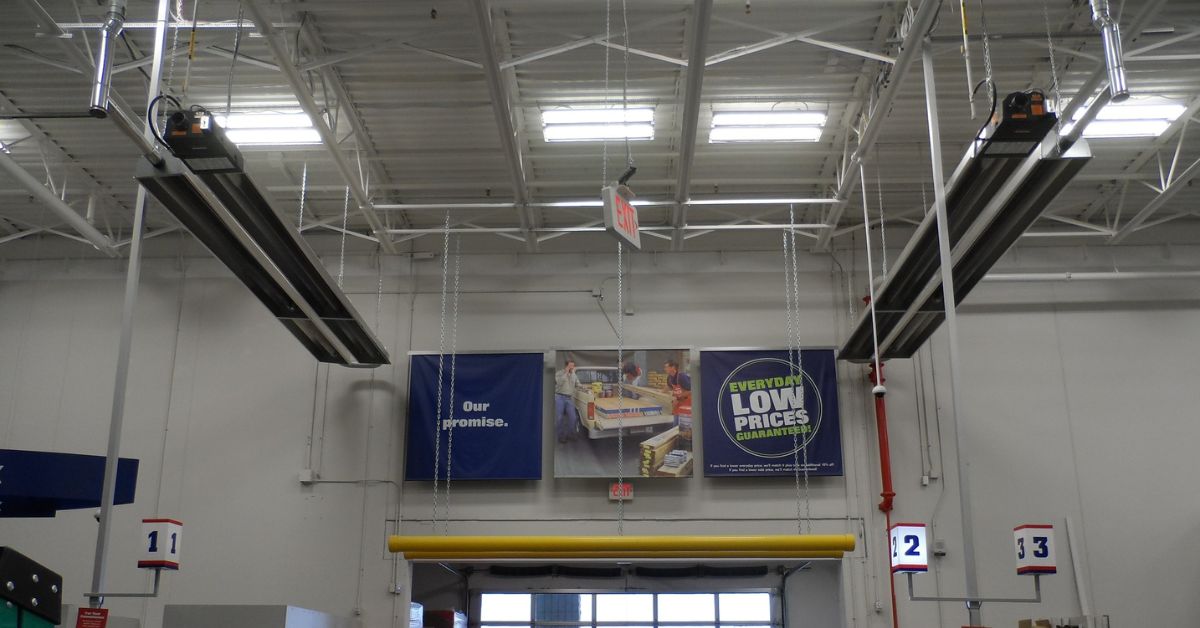
Heavy snowfall, severe winds, and cold temperatures can affect working conditions in your industrial facility. Even with proper insulation, large warehouses with open floor plans will require additional resources to maintain a warm workplace. Learn how to heat warehouses and other industrial buildings effectively for a safe work environment.
Common Industrial Heating Challenges: Why Large Warehouses & Industrial Buildings Are Difficult To Heat Efficiently
Warehouses and industrial buildings typically feature high ceilings, expansive floor plans, and frequent door openings that allow heat to escape rapidly. Cold air naturally settles at the ground level where workers operate, while warm air rises to the ceiling where it provides little benefit to personnel or temperature-sensitive products.
Traditional heating methods often prove inadequate and inefficient for these environments. Forced-air systems struggle to distribute heat evenly across large spaces. Additionally, these systems consume excessive energy while failing to maintain consistent temperatures where workers need warmth most.
The scale of industrial buildings creates unique heating obstacles that simply do not exist in residential or small commercial spaces. A warehouse may contain hundreds of thousands of cubic feet of air, making it difficult and expensive to heat using conventional methods. Every time a loading dock door opens, a significant amount of conditioned air escapes and is replaced by cold outside air. Heating systems must then work harder to restore comfortable temperatures.
Industrial facilities also experience changing heating demands throughout the day. Early morning shifts may require rapid heating after the building has cooled overnight, while afternoon operations may involve increased equipment heat loads and employee activity. A heating solution must be flexible enough to adapt to these changing conditions without wasting energy.
The Impact of Cold on Operations
Cold temperatures create uncomfortable and unsafe working conditions for operators. Low temperatures can damage sensitive products, reduce equipment efficiency, and compromise worker safety and productivity. Frozen pipes, condensation problems, and equipment malfunctions also frequently occur in inadequately heated facilities, leading to expensive repairs and operational disruptions.
Workers in cold environments experience reduced dexterity, slower reaction times, and increased fatigue. These conditions elevate the risk of workplace accidents and decrease overall productivity.
When employees are forced to work in cold conditions, morale often suffers as well. Workers may need to wear bulky clothing that restricts movement, making routine tasks more difficult and less efficient. Repetitive tasks become more physically demanding, and overall comfort levels decline throughout the workday.
Cold conditions can also negatively impact inventory and stored materials. Certain products require stable temperatures to maintain quality and functionality. Electronics, adhesives, chemicals, paints, and many manufacturing components may degrade when exposed to prolonged cold. Businesses that fail to maintain appropriate temperatures may face product losses, warranty issues, and customer dissatisfaction.
Equipment performance is another critical concern. Batteries lose efficiency in cold environments, hydraulic fluids become more viscous, and machinery often requires longer startup times. Maintaining proper temperatures can significantly improve equipment reliability and reduce maintenance costs.
Understanding Industrial Heating Options
Before selecting a heating system, it is important to understand the different technologies available for industrial applications.
Forced-Air Heating Systems
Forced-air systems remain one of the most common heating solutions in industrial buildings. These systems heat air and distribute it through ducts or large air handlers. While effective in some environments, they often struggle in warehouses with high ceilings because warm air naturally rises away from occupied areas.
The result is thermal stratification, where temperatures near the ceiling can be dramatically warmer than temperatures at floor level. Businesses end up paying to heat unused air rather than focusing warmth where people actually work.
Unit Heaters
Unit heaters are another popular choice. These systems are mounted overhead and blow heated air into a space. While they provide localized heating, they can still contribute to air movement and heat loss, particularly in facilities with frequent door openings.
Hydronic Heating Systems
Hydronic systems use heated water to distribute warmth through pipes, radiators, or in-floor heating systems. While highly efficient in certain applications, installation costs can be substantial, especially in existing buildings that require retrofitting.
Infrared Heating Systems
Infrared heating systems operate differently by heating objects and people directly instead of warming the air first. This approach offers significant advantages in large industrial facilities where traditional heating methods often struggle.
Why Mounted Infrared Heaters Excel in Industrial Settings
As a solution to these problems, mounted infrared heaters deliver targeted heat directly to people and objects rather than attempting to warm the entire air volume of a large space. This direct heating approach proves far more efficient and effective than conventional heating methods.
Infrared technology works by emitting radiant energy that travels through the air without heating it. When this energy reaches solid objects, including floors, equipment, and people, it converts to heat. This offers a warm environment for businesses during harsh winter months.
Because infrared heaters warm surfaces directly, those surfaces continue releasing heat long after the heater has cycled off. Floors, equipment, shelving, and workstations become secondary heat sources that help maintain a comfortable environment.
Quick Heat Distribution
Unlike forced-air systems that require time to circulate warm air throughout the space, mounted infrared heaters provide quick heat upon activation. Workers feel the warming effects almost immediately, so they won’t have to wait for lengthy warm-up periods associated with traditional heating systems. This quick response proves particularly valuable in facilities that operate intermittently or require quick temperature adjustments.
This rapid heat delivery can significantly improve comfort during shift changes, early morning operations, and cold weather events. Instead of waiting for an entire building to warm up, employees begin experiencing the benefits almost immediately.
Energy Efficiency Advantages
Mounted infrared heaters operate with exceptional energy efficiency compared to conventional heating systems. These units convert nearly 100% of their energy input into usable heat, with minimal energy lost to heating unused air space. The targeted heating approach reduces energy consumption by focusing heat where workers actually need it rather than attempting to warm the entire building.
The radiant heat produced by infrared systems also reduces heat loss through air movement and ventilation systems. Traditional heated air easily escapes through doors, windows, and ventilation systems. Infrared heat, on the other hand, remains with the objects it warms, providing longer-lasting comfort with less energy consumption.
For many facilities, this translates into significant energy savings over time. Businesses often discover that infrared systems allow them to maintain comfortable working conditions while using substantially less energy than traditional heating solutions.
Reducing Thermal Stratification
One of the biggest challenges in warehouses is thermal stratification. Traditional heating systems often create a temperature difference of 15 to 30 degrees between the floor and ceiling.
Infrared heaters dramatically reduce this issue because they focus energy downward toward occupied spaces. Workers remain comfortable at floor level without requiring excessive heating of the upper portions of the building.
This targeted approach not only improves comfort but also lowers operating costs by eliminating wasted heat.
Strategic Placement & Installation Considerations
Proper placement of mounted infrared heaters maximizes their effectiveness for even heat distribution throughout your facility. Installation height, angle, and spacing all influence the system’s performance and the comfort levels experienced by workers.
A well-designed heating layout considers workflow patterns, building dimensions, occupancy levels, and equipment placement. Strategic planning ensures every area receives appropriate heat coverage while minimizing wasted energy.
Coverage Patterns & Spacing
Each mounted infrared heater creates a specific heat pattern based on its design and mounting position. Calculate the coverage area for each unit to determine proper spacing between heaters.
Overlap coverage zones slightly to eliminate cold spots while avoiding excessive heat concentration in any single area. For obstacles such as shelving, equipment, and structural elements that may block radiant energy, position heaters to minimize these shadow areas or install additional units to compensate for blocked radiation paths.
Professional heat mapping can help facility managers determine optimal placement locations and identify areas requiring supplemental heating.
Electrical Safety Requirements
Before installing an infrared heater in your building, ensure your facility’s electrical system can support the power requirements of your new unit. Consult with qualified electricians to verify adequate power capacity and proper circuit protection.
Install all units according to the manufacturer’s specifications and local electrical codes. Also, maintain proper clearances from combustible materials and adequate ventilation around electrical components. Regular inspection and maintenance of electrical connections prevents system failures and safety hazards.
Creating Heating Zones
Not every area of a warehouse requires the same temperature. Heating zones allow facility managers to direct warmth precisely where it is needed.
For example, office areas, break rooms, assembly stations, and loading docks often have very different heating requirements. By creating independent heating zones, businesses can reduce energy consumption while improving comfort throughout the facility.
Zone heating also provides greater operational flexibility. Areas with lower occupancy can operate at reduced temperatures while heavily used spaces remain comfortable.
Heating Different Types of Industrial Spaces
Different industrial environments require customized heating approaches based on their specific operational requirements, layout characteristics, and environmental conditions. Find out how to heat your warehouses and other industrial buildings by assessing the area’s needs.
Warehouse Storage Areas
Storage warehouses often contain temperature-sensitive products that require consistent environmental conditions. Protect your equipment by positioning mounted infrared heaters to provide even heat distribution throughout storage areas. Create heating zones that allow for different temperature requirements in various storage sections.
As you create a layout for your warehouse’s heating solutions, consider the height and configuration of storage racks. Tall storage systems may block radiant energy from reaching aisles and work areas. Install heaters at appropriate angles to direct heat into aisles where workers operate with proper clearances from stored materials.
Manufacturing Floors
Manufacturing facilities require focused heating in work areas where employees spend extended periods. Mount infrared heaters to provide comfortable working conditions at machinery stations, assembly lines, and quality control areas.
Some machinery produces significant heat that may reduce heating requirements in surrounding areas. Balance infrared heating with existing heat sources to maintain consistent temperatures without overheating work areas.
Loading Docks
Loading docks present particular heating challenges due to frequent door openings and exposure to outside temperatures. Placing infrared heaters near dock doors compensates for heat loss during loading operations and maintains comfortable conditions for dock workers.
Dock personnel often spend extended periods near open doors, making targeted radiant heating particularly valuable. Infrared heat continues warming workers even when cold air enters the building.
Distribution Centers
Modern distribution centers operate around the clock and require consistent comfort levels for employees responsible for picking, packing, and shipping products.
Infrared heating systems provide reliable warmth without interfering with material handling equipment or warehouse operations. Because they are mounted overhead, they preserve valuable floor space while delivering efficient heating performance.
Aircraft Hangars & Large Maintenance Facilities
Aircraft hangars and maintenance facilities present unique heating challenges due to their enormous size and frequent door openings.
Infrared heaters are particularly effective in these environments because they can warm work areas, equipment, and personnel directly without attempting to heat the entire air volume inside the building.
Employee Comfort & Productivity Benefits
Comfortable employees are more productive, focused, and engaged. Maintaining proper temperatures throughout industrial facilities contributes to improved job satisfaction and operational efficiency.
Workers who feel comfortable are less likely to take unscheduled breaks to warm up, less likely to experience cold-related fatigue, and more likely to perform tasks accurately.
Improved comfort can also support employee retention and recruitment efforts. Facilities that prioritize worker well-being often gain a competitive advantage in attracting skilled labor.
Maintenance & Safety Protocols
Regular maintenance allows your mounted infrared heating system to operate safely and efficiently throughout its service life. Establish maintenance schedules and safety protocols to protect your investment and maintain optimal performance.
Routine Inspection Requirements
Inspect heating units monthly for signs of damage, wear, or contamination. This includes checking mounting hardware for looseness or corrosion that could affect unit stability and examining electrical connections for signs of overheating, corrosion, or damage.
For simple cleaning methods, remove dust, debris, and other contaminants from heating elements and housing components. Accumulated debris reduces heat output and may create fire hazards, so check these systems routinely to avoid expensive repairs.
Safety Monitoring Systems
Install temperature monitoring systems to track heat levels throughout your facility. These systems provide early warning of equipment malfunctions or inadequate heating that could affect worker safety or product integrity. Training facility personnel on proper shutdown procedures will protect your business from harm.
Planning for Long-Term Success
Industrial heating should be viewed as a long-term investment rather than a short-term expense. The right heating solution can reduce operating costs, improve worker comfort, protect inventory, and increase overall productivity for years to come.
When evaluating heating systems, consider not only installation costs but also energy consumption, maintenance requirements, equipment lifespan, and overall performance. A properly designed infrared heating system often delivers substantial returns through lower operating expenses and improved workplace conditions.
Conclusion
Heating warehouses and industrial buildings effectively requires more than simply increasing thermostat settings or installing larger heating equipment. Large open spaces, high ceilings, frequent door openings, and demanding operational conditions require specialized heating solutions that focus warmth where it matters most.
Mounted infrared heaters provide an efficient, reliable, and cost-effective answer to many industrial heating challenges. By delivering radiant heat directly to workers, equipment, and workspaces, these systems improve comfort, reduce energy waste, minimize thermal stratification, and support safer working conditions throughout the year.
For reliable heating solutions, partner with Calcana USA. Our team provides commercial heaters for businesses looking to maintain a safe and reliable facility for products and staff year-round. Plan your installation by browsing our equipment and mounting kits to improve your industrial workplace today.

Leave a comment
This site is protected by hCaptcha and the hCaptcha Privacy Policy and Terms of Service apply.