
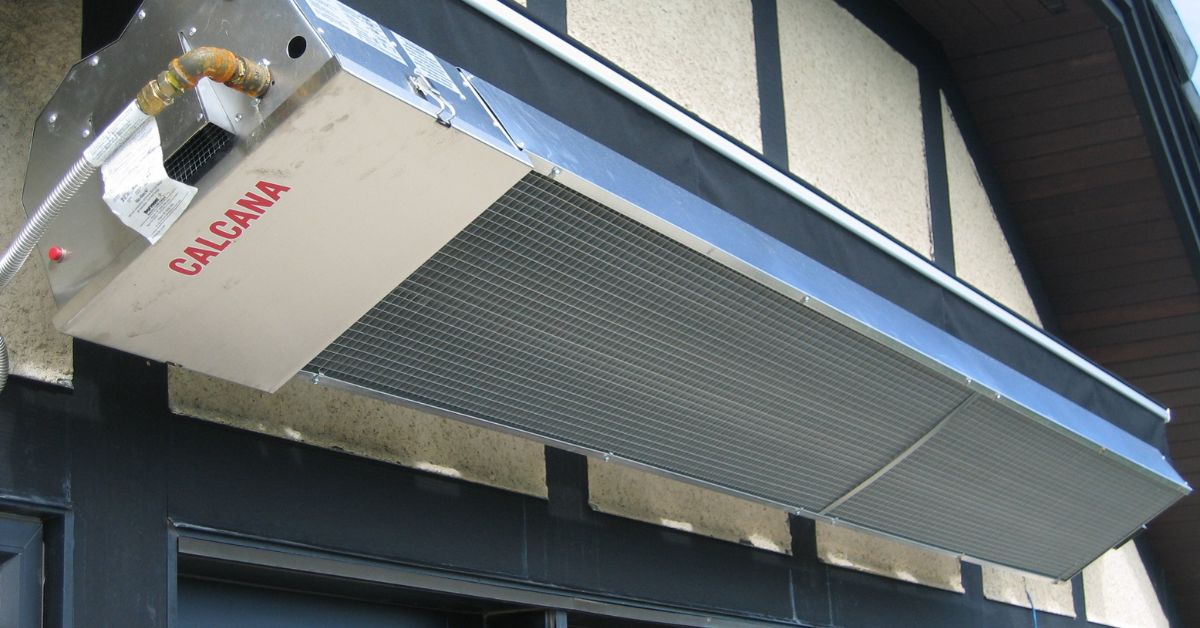
Many people spend a great deal of time comparing heater models, BTU ratings, fuel types, and mounting options, but far fewer consider how much of an impact placement has on overall performance. In reality, even the most powerful radiant heater can struggle to deliver ideal comfort if it is installed in the wrong location. Conversely, a properly positioned heater often performs better, feels warmer, and operates more efficiently than expected.
Radiant heat works differently than conventional forced-air systems. Instead of warming the air itself, infrared energy travels directly from the heater to people, surfaces, furniture, equipment, and flooring. Because of this, placement determines exactly where that heat energy is delivered. A heater mounted too high, too low, or pointed in the wrong direction may leave occupants feeling underwhelmed despite the system operating correctly.
This is especially important for commercial applications. Restaurant owners, hospitality venues, event spaces, and entertainment facilities often invest in outdoor heating to create a comfortable environment for guests. Strategic placement ensures the heat reaches dining tables, lounge areas, and waiting spaces rather than being directed toward walkways or unused sections of the patio.
When planning any radiant heating project, placement should be viewed as a critical part of the design process rather than an afterthought.
Understanding How Infrared Heat Travels & Why Proper Heater Placement Is Essential for Maximum Comfort & Efficiency
To choose the best location for a radiant heater, it helps to understand how infrared heat behaves.
Traditional heating systems rely on convection. Warm air rises from a heat source and circulates throughout a room. Infrared heaters operate differently. They emit radiant energy that travels in straight lines until it encounters a solid object.
This means infrared heat behaves much like sunlight. When you stand in direct sunshine on a cool day, you feel warm even though the surrounding air may still be cold. Infrared heaters create a similar effect.
Because infrared energy travels in straight paths, obstacles can block the warmth before it reaches its intended target. Large furniture, partitions, shelving systems, decorative features, or equipment may interrupt heat coverage if the heater is positioned incorrectly.
When evaluating placement options, homeowners and business owners should think about line-of-sight heating. If the heater can "see" the area you want to warm, it will generally perform well. If objects block the path, adjustments may be necessary.
Understanding this simple concept often helps eliminate cold spots and improve overall comfort.
Choosing the Right Spot for Residential Patios
Outdoor living spaces have become an extension of the modern home. Homeowners increasingly use patios for entertaining, dining, relaxing, and spending time with family throughout the year.
The challenge is that outdoor temperatures can fluctuate significantly throughout the day. Once the sun sets, even pleasant afternoons can quickly become chilly.
For patio applications, radiant heaters should be positioned to cover the areas where people naturally gather. Seating arrangements, dining tables, outdoor kitchens, firepit lounges, and conversation areas should all be considered during the planning process.
Mounted heaters installed above or slightly in front of seating areas often provide the most comfortable results. This positioning allows the infrared energy to reach guests directly while maintaining a clean, unobtrusive appearance.
Many homeowners make the mistake of installing a heater solely based on available wall space rather than considering how the patio is actually used. While the installation may appear visually appealing, it may not provide optimal comfort.
Instead, start by identifying where people spend the majority of their time. Once these areas are established, position the heaters to maximize coverage of those zones.
Heating Outdoor Dining Areas Effectively
Restaurants face unique challenges when choosing radiant heater locations.
Unlike residential patios, restaurant seating layouts often change. Tables may be rearranged to accommodate different group sizes, seasonal traffic fluctuations, or special events. As a result, flexibility and coverage become important considerations.
Mounted infrared heaters are often the preferred solution because they keep valuable floor space clear while delivering reliable warmth. Ceiling-mounted installations work particularly well for larger patios because they provide broad coverage without interfering with guest movement.
Restaurant owners should also consider customer flow when planning installations. Entryways, waiting areas, and high-traffic sections may benefit from supplemental heating to create a more welcoming experience.
By strategically positioning heaters throughout the patio, restaurants can maximize seating capacity during cooler months and create an environment that encourages guests to stay longer.
Finding the Right Placement for Garage Heating
Garages are one of the most popular spaces for infrared heaters.
Whether used as workshops, home gyms, hobby rooms, or storage areas, garages often become difficult to heat because of poor insulation and large overhead doors.
Unlike living rooms or bedrooms, garage activities typically occur within specific zones. A homeowner may spend most of their time at a workbench, exercise area, vehicle maintenance station, or hobby corner.
Infrared heaters excel in these situations because they can be positioned to warm activity areas directly rather than attempting to heat the entire garage volume.
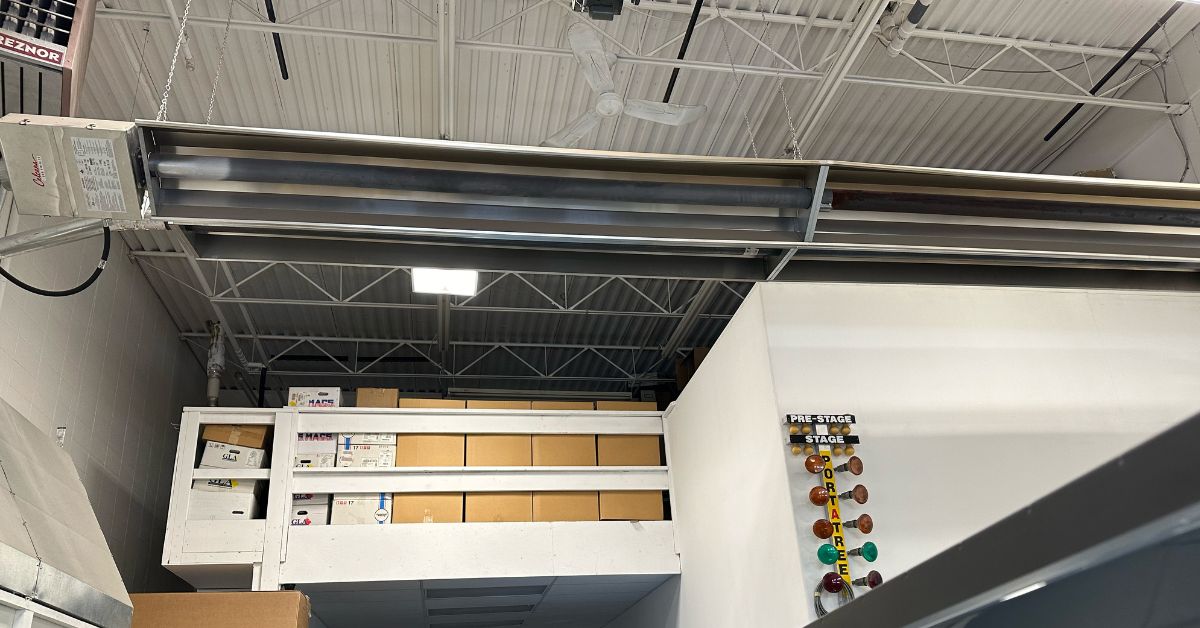
Installing a heater above a workbench or centrally above a workout space often provides immediate comfort while reducing energy consumption. Instead of heating thousands of cubic feet of air, the heater focuses warmth where it matters most.
This targeted approach is one of the primary reasons infrared heating continues to gain popularity among homeowners.
Ceiling Height Considerations
Ceiling height plays a significant role in radiant heater performance.
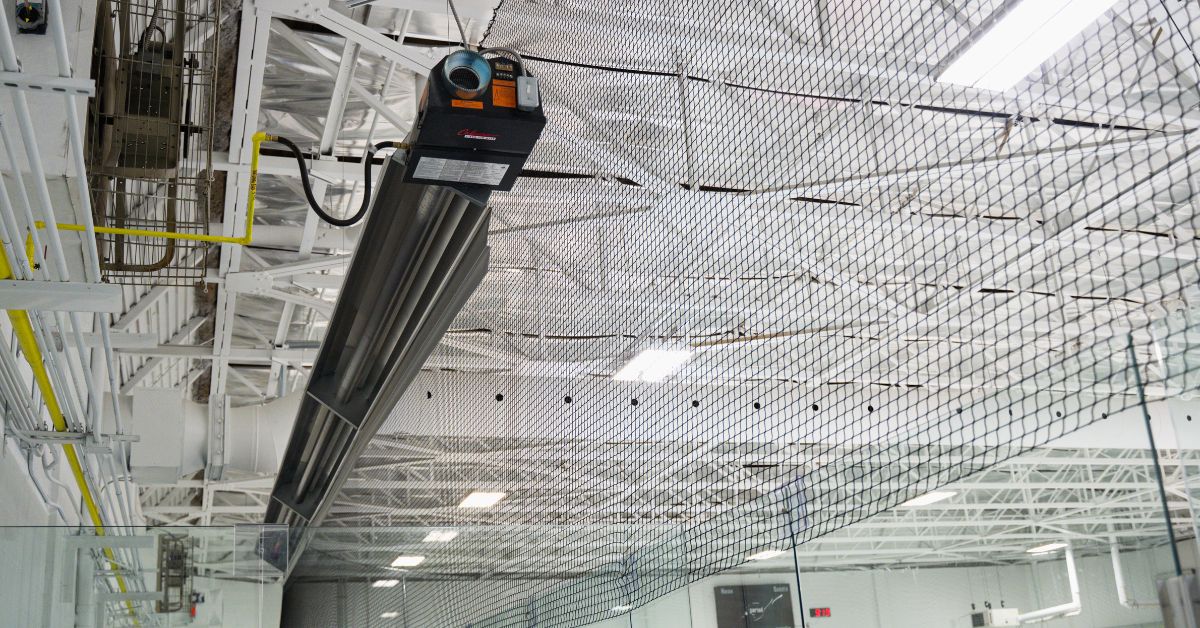
Higher ceilings generally require more careful planning because the heater must deliver energy over a greater distance. Fortunately, infrared heat remains effective even in spaces with elevated ceilings because it does not rely on heated air remaining near occupants.
Warehouses, industrial facilities, event venues, and commercial buildings frequently benefit from infrared technology for this reason.
When ceilings exceed standard residential heights, selecting the appropriate mounting height becomes increasingly important. Installations that are too high may reduce heat intensity at floor level, while installations that are too low may create concentrated hot spots.
Manufacturers provide recommended mounting ranges based on heater output. Following these guidelines helps achieve the best combination of comfort, efficiency, and coverage.
Accounting for Wind & Air Movement
One of the greatest advantages of infrared heating is its ability to perform in environments where traditional heating struggles.
Wind can quickly disperse warm air generated by conventional heating systems. This often makes outdoor spaces difficult and expensive to heat using forced-air technology.
Infrared heaters avoid this problem because they warm people and objects directly. However, placement still matters.
Positioning heaters in partially sheltered areas can improve performance by reducing exposure to strong wind currents. Covered patios, pergolas, awnings, and architectural features often help create a more stable heating environment.
Understanding prevailing wind patterns can also influence installation decisions. A heater positioned to take advantage of natural shelter will generally deliver more consistent comfort throughout the year.
Avoiding Common Placement Mistakes
Many heating performance issues can be traced back to simple installation mistakes.
One of the most common errors is mounting heaters too far away from the intended coverage area. While the heater may technically warm the space, occupants may not experience the desired comfort levels.
Another frequent mistake involves aiming heaters incorrectly. Because infrared heat travels directionally, even small angle adjustments can significantly impact coverage.
Some property owners also install heaters behind seating areas, causing furniture to absorb much of the heat before it reaches occupants.
Others place heaters near decorative features, signage, plants, or architectural elements that unintentionally block radiant energy.
Taking the time to evaluate heat paths before installation helps avoid these issues and maximizes performance.
Professional Planning Creates Better Results
While some installations appear straightforward, professional planning often delivers superior results.
Experienced installers understand how factors such as mounting height, coverage patterns, wind exposure, structural limitations, and occupancy zones influence performance.
They can recommend the ideal number of heaters, proper placement locations, and mounting configurations to ensure consistent comfort.
Professional installation also helps maintain safety compliance, proper clearances, and manufacturer warranty requirements.
For businesses that rely on outdoor comfort to generate revenue, professional planning often produces significant long-term benefits through improved guest satisfaction and reduced operating costs.
Why Calcana Infrared Heaters Offer Flexible Installation Options
Every space is different, which is why flexibility matters when selecting an infrared heating solution.
Calcana heaters are designed to accommodate a variety of installation configurations, including wall-mounted and ceiling-mounted applications. This flexibility allows homeowners and business owners to position heaters where they will have the greatest impact rather than being limited by equipment constraints. At Calcana USA, our wall-mounted heaters ensure you get the best heat distribution no matter where you decide to hang them. Plus, with our infrared heater wall mounting kit, customers will receive everything they need to conduct a quick and easy installation.
Whether you're heating a residential patio, restaurant dining area, warehouse, workshop, garage, brewery patio, rooftop lounge, or commercial entertainment space, proper placement helps maximize comfort and efficiency.
Combined with Calcana's powerful infrared technology, strategic heater placement allows you to create comfortable environments that can be enjoyed throughout more of the year while maintaining energy efficiency and preserving valuable floor space.
By understanding how radiant heat works and carefully evaluating your space before installation, you can ensure your investment delivers reliable warmth exactly where it's needed most.
Leave a comment
This site is protected by hCaptcha and the hCaptcha Privacy Policy and Terms of Service apply.