
Warehouses are among the most challenging environments to heat effectively. Their large open floor plans, towering ceilings, frequent door openings, and constantly changing workflows make maintaining consistent temperatures difficult throughout the facility. While many industrial buildings rely on conventional heating systems, these solutions often struggle to provide even heat distribution, leading to uncomfortable cold spots that affect employees, equipment, inventory, and overall productivity.
Cold spots are more than a minor inconvenience. They can create uncomfortable working conditions, reduce employee efficiency, impact product quality, increase energy consumption, and place additional stress on heating systems trying to compensate for uneven temperatures. In many warehouses, workers may experience significantly different temperatures depending on where they are standing, even within the same building.
Fortunately, infrared heating technology offers a smarter and more efficient solution. Rather than attempting to heat vast amounts of air that naturally rise toward the ceiling, infrared heaters deliver radiant heat directly to people, equipment, inventory, floors, and work surfaces. This targeted heating approach helps eliminate cold zones while improving comfort and reducing operating costs.
Understanding how infrared heaters reduce cold spots in warehouses can help facility managers, warehouse owners, and operations teams create more comfortable, productive, and energy-efficient environments year-round.
The Unique Heating Challenges of Warehouses: High Ceilings, Cold Spots, & Rising Energy Costs
Many commercial and industrial buildings face heating challenges, but warehouses present a unique combination of factors that make temperature control especially difficult.
Unlike office buildings, warehouses are typically designed to maximize storage capacity and operational efficiency rather than thermal performance. High ceilings, open layouts, loading docks, and large overhead doors all contribute to significant heat loss throughout the year.
Even when a warehouse has a powerful heating system, maintaining consistent temperatures across the entire facility can be surprisingly difficult.
Traditional heating systems often work harder and consume more energy while still leaving portions of the building noticeably colder than others. Understanding these challenges helps explain why cold spots are so common and why infrared heating technology has become increasingly popular in industrial environments.
The Impact of Large Open Spaces
One of the primary reasons warehouses develop cold spots is their sheer size.
Unlike smaller commercial buildings that contain multiple rooms and partitions, warehouses often consist of thousands of square feet of uninterrupted floor space. While this layout supports efficient storage and logistics operations, it creates significant challenges for conventional heating systems.
When heated air is introduced into a large open environment, it naturally disperses throughout the space. The farther warm air must travel, the more opportunity there is for heat loss and temperature variation. Areas closest to heating equipment often remain comfortable, while distant sections receive less warmth and become noticeably colder.
The larger the facility becomes, the more difficult it is for traditional systems to maintain uniform temperatures across every section of the building. This often results in a patchwork of warm and cold areas that affect worker comfort and operational efficiency.
High Ceilings Create Thermal Stratification
Warehouse ceilings frequently range from twenty to forty feet high, with some facilities reaching even greater heights. While these ceilings provide valuable vertical storage capacity, they also contribute significantly to heating inefficiency.
Warm air naturally rises. Traditional forced-air systems heat the air at floor level, but that warm air quickly migrates upward and accumulates near the ceiling. This phenomenon, known as thermal stratification, creates large temperature differences between the upper and lower portions of the building.
In many warehouses, temperatures near the ceiling can be dramatically warmer than those experienced by employees working below. The heating system continues operating to compensate for cold conditions at ground level, yet much of the generated heat remains trapped overhead where it provides little practical benefit.
As a result, businesses spend significant amounts of money heating unused air while workers continue dealing with uncomfortable cold spots throughout the facility.
Loading Docks & Overhead Doors Increase Heat Loss
Warehouse operations depend on the constant movement of products, materials, equipment, and personnel. Loading docks and overhead doors are essential for maintaining productivity, but they also create one of the largest sources of heat loss.
Every time a door opens, cold outdoor air enters the facility while conditioned indoor air escapes. During busy periods, these doors may remain open for extended durations or cycle repeatedly throughout the day.
Traditional heating systems often struggle to recover from this continual exchange of air. By the time the space begins warming again, another door opening may occur, creating an endless cycle of heat loss and recovery.
Areas located near shipping and receiving zones often become permanent cold spots because conventional heating systems simply cannot respond quickly enough to offset these ongoing temperature fluctuations.
Drafts & Air Movement Complicate Heating Efforts
Even when warehouse doors remain closed, drafts can still impact indoor temperatures.
Air movement enters through loading dock seals, gaps around doors, ventilation systems, aging building envelopes, and other openings throughout the structure. These drafts disrupt warm air distribution and create localized cold zones.
Traditional forced-air systems often worsen the problem by continuously circulating air throughout the building. While intended to distribute warmth evenly, the movement can actually accelerate heat loss and make drafts feel more pronounced.
Workers stationed near draft-prone areas frequently experience discomfort despite the heating system operating continuously.
Poor Insulation Magnifies Temperature Problems
Many warehouses prioritize structural durability and storage capacity over insulation performance.
Older industrial facilities especially may have limited wall insulation, aging roofing systems, or outdated building envelopes that allow substantial heat transfer between indoor and outdoor environments.
Even modern facilities can experience insulation challenges due to their size and design requirements.
Heat naturally escapes through roofs, walls, windows, dock doors, and structural penetrations. During winter months, this heat loss increases the workload placed on heating systems while contributing to uneven temperatures throughout the building.
Areas located near exterior walls often become colder than interior sections because they are exposed to greater heat loss.
Why Cold Spots Matter More Than Many Businesses Realize
Cold spots affect more than employee comfort.
Inconsistent temperatures can have measurable consequences throughout warehouse operations. Workers exposed to colder conditions often experience reduced comfort, lower morale, and decreased productivity. Tasks that require precision or dexterity may become more difficult when employees are working in chilly environments.
Temperature fluctuations can also impact equipment performance. Certain machinery operates best within specific temperature ranges. Cold conditions may affect lubrication performance, battery efficiency, sensor accuracy, and other critical components.
Inventory protection presents another concern. Products such as electronics, chemicals, paints, pharmaceuticals, food products, and certain raw materials may be sensitive to temperature extremes. Cold spots increase the risk of inventory damage, quality issues, or reduced shelf life.
Addressing cold spots therefore becomes an important operational objective rather than simply a comfort upgrade.
How Infrared Heaters Work
Infrared heaters operate differently from conventional heating systems.
Instead of heating the surrounding air, infrared heaters emit radiant energy that travels directly to objects, surfaces, and people. When this energy encounters a solid object, it converts into heat.
The process closely resembles the warming effect of sunlight. Even when outdoor air temperatures are cool, direct sunlight still provides noticeable warmth because energy transfers directly to surfaces rather than heating the air first.
This distinction fundamentally changes how heat behaves within large industrial environments.
Rather than filling an entire warehouse with heated air, infrared systems focus their energy precisely where warmth is needed.
Floors, shelving, equipment, workstations, inventory, and employees absorb radiant energy and gradually release warmth back into the surrounding environment.
This creates a more stable and comfortable temperature profile throughout the building.
Eliminating Cold Spots Through Direct Heating
One of the greatest advantages of infrared heating is its ability to address cold spots directly.
Traditional systems attempt to heat entire volumes of air. Infrared systems instead target specific locations where warmth is needed most.
Areas near loading docks, shipping stations, assembly lines, packaging zones, maintenance workstations, or employee gathering spaces can receive focused heating coverage without requiring the entire building to reach the same temperature.
Because radiant heat transfers directly to surfaces and occupants, warmth remains concentrated in occupied areas even when doors open or air movement occurs.
This targeted approach allows facility managers to solve cold spot problems far more effectively than conventional heating methods.
Faster Warm-Up Times Improve Comfort
Infrared heaters begin delivering warmth almost immediately after activation.
Traditional forced-air systems must first heat large volumes of air before occupants feel any noticeable temperature change. This process can take significant time, particularly in large warehouses.
Infrared systems eliminate much of this delay.
Employees working within the heater's coverage area feel warmth quickly because radiant energy transfers directly to their bodies and surrounding surfaces. This immediate response improves comfort while reducing the need for excessive preheating periods.
Facilities operating multiple shifts especially benefit from faster heat delivery because work areas can reach comfortable temperatures more quickly at the beginning of each shift.
Reducing Thermal Stratification
One of the most important ways infrared heaters reduce cold spots involves minimizing thermal stratification.
Because radiant heat warms floors, equipment, inventory, and workers directly, less energy accumulates uselessly near the ceiling. Heat remains concentrated where it delivers practical value rather than gathering overhead.
This helps maintain more uniform temperatures between upper and lower portions of the building.
Workers benefit from improved comfort at floor level while businesses avoid wasting energy heating unused air high above operational areas.
The reduction in thermal stratification often represents one of the largest efficiency improvements warehouses experience after converting to infrared heating.
Zone Heating Improves Efficiency
Warehouses rarely require identical temperatures throughout every square foot of space.
Shipping areas, maintenance stations, packaging departments, assembly zones, offices, and storage sections often have different heating requirements.
Infrared systems support zone heating strategies that allow businesses to direct warmth precisely where needed.
Rather than heating the entire facility uniformly, managers can prioritize occupied workspaces while reducing heating output in less frequently used areas.
This targeted approach helps eliminate cold spots while simultaneously lowering overall energy consumption.
Gas & Electric Infrared Heating Options
Warehouse operators typically choose between gas-powered and electric infrared heating systems depending on facility requirements.
Gas-powered infrared heaters often provide the best solution for large industrial facilities because they offer substantial heating capacity and lower operating costs for extensive coverage areas. Their high output makes them especially effective in warehouses with significant square footage and high ceilings.
Electric infrared heaters offer a clean and straightforward alternative for smaller industrial applications or localized heating needs. They require less infrastructure and produce no combustion emissions at the point of use.
Both technologies provide the same fundamental benefit of radiant heating, allowing businesses to reduce cold spots through direct energy transfer rather than air heating.
Improving Employee Comfort & Productivity
Comfortable employees work more effectively.
Cold working conditions contribute to fatigue, distraction, reduced morale, and lower productivity. Workers who constantly battle uncomfortable temperatures often struggle to maintain focus throughout their shifts.
Infrared heaters create more stable and comfortable work environments by reducing drafts and eliminating cold zones.
Because radiant heat warms individuals directly, employees often feel comfortable even when ambient air temperatures remain lower than those required by traditional heating systems.
This enhanced comfort contributes to better workplace satisfaction while supporting operational efficiency.
Protecting Equipment & Inventory
Warehouses frequently store valuable inventory and operate expensive equipment.
Extreme temperature fluctuations can damage products, shorten equipment lifespan, and increase maintenance requirements.
Infrared heating provides consistent warmth that helps stabilize environmental conditions throughout the facility. Machinery remains protected from freezing temperatures, while inventory benefits from reduced exposure to damaging cold spots.
Businesses handling sensitive products often view this protection as one of the most valuable benefits of infrared heating technology.
Long-Term Energy Savings
Reducing cold spots is only one advantage of infrared heating.
Because radiant systems deliver heat directly rather than continuously reheating large volumes of air, they often operate far more efficiently than conventional alternatives.
Businesses typically experience reduced energy waste from:
- Thermal stratification
- Air infiltration
- Drafts
- Open doors
- Unoccupied spaces
- Excessive heat loss
The result is lower operating costs alongside improved comfort and temperature consistency.
For warehouses operating year-round, these savings can accumulate significantly over time.
Professional Installation Maximizes Results
Proper heater placement plays a major role in warehouse heating performance.
Professional installers evaluate ceiling height, building layout, workflow patterns, loading dock locations, equipment placement, and occupancy zones when designing infrared heating systems.
Strategic placement ensures optimal coverage while targeting areas most susceptible to cold spots.
Professionally installed systems also comply with electrical and safety requirements while maximizing efficiency and long-term reliability.
Why Calcana Infrared Heaters Are Ideal for Warehouses
Large industrial facilities require heating systems capable of delivering reliable performance under demanding conditions.
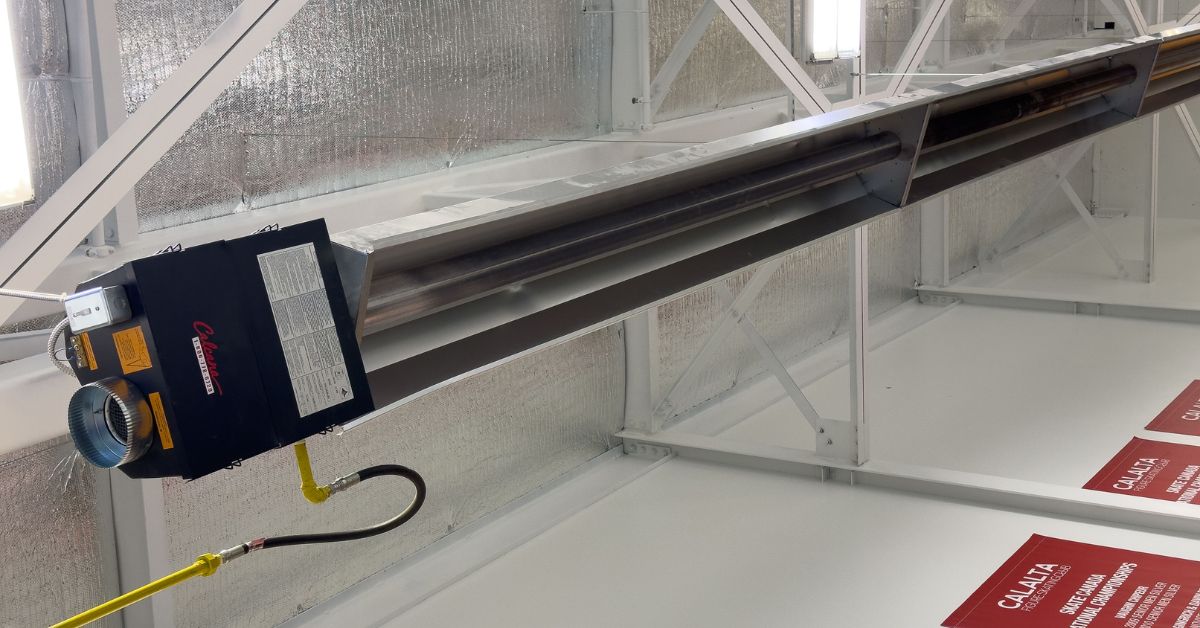
Calcana's ceiling-mounted industrial infrared heaters are engineered specifically for commercial and industrial applications where traditional heating systems often fall short. Their mounted design keeps valuable floor space clear while delivering efficient radiant warmth directly to work areas, equipment, and inventory.
By reducing thermal stratification, improving comfort, minimizing cold spots, and lowering energy consumption, Calcana infrared heaters help warehouses create more productive and cost-effective environments year-round.
Create a More Comfortable Warehouse With Infrared Heating
Cold spots don't have to be an unavoidable part of warehouse operations.
Infrared heating technology provides a smarter approach to industrial comfort by delivering targeted warmth exactly where it is needed most. Whether your facility struggles with high ceilings, drafty loading docks, uneven temperatures, or rising energy costs, infrared heaters offer an effective solution that improves both comfort and efficiency.
With professionally designed infrared heating systems, warehouses can reduce cold spots, protect inventory, improve employee satisfaction, and lower operating costs while maintaining reliable performance throughout the heating season.


Leave a comment
This site is protected by hCaptcha and the hCaptcha Privacy Policy and Terms of Service apply.