
Warehouses are some of the most difficult commercial environments to heat efficiently. Large square footage, tall ceilings, constant movement, open loading bays, and changing occupancy levels create conditions where traditional heating systems often waste significant amounts of energy while still struggling to maintain comfort.
For many warehouse operators, heating costs become one of the largest ongoing operational expenses during colder months. Conventional forced-air systems work continuously to warm massive volumes of air, only for much of that heat to rise toward the ceiling or escape every time a door opens. The result is uneven temperatures, rising utility bills, and inefficient energy use throughout the facility.
This challenge has led many industrial and commercial operators to explore more targeted and cost-effective heating solutions. Infrared heating technology has quickly become one of the most efficient options for warehouses because it approaches heating differently. Instead of warming the air, infrared systems warm people, machinery, floors, and workspaces directly.
This distinction dramatically changes how heat behaves in large industrial environments. Rather than continuously fighting heat loss, infrared systems deliver warmth exactly where it is needed while using significantly less energy in the process.
Understanding how infrared heaters cut energy costs for warehouses begins with understanding how radiant heating works and why it is uniquely suited for large-scale commercial environments.
Why Warehouses Are Difficult To Heat Efficiently & How Large Industrial Spaces Lose Energy
Warehouse heating presents challenges that many traditional systems simply were not designed to overcome effectively.
Unlike residential homes or office spaces, warehouses often feature expansive open layouts with minimal compartmentalization. These spaces can include tall ceilings exceeding 20 or even 40 feet, large overhead doors that open repeatedly throughout the day, and constant airflow caused by equipment movement and ventilation systems.
Traditional heating systems rely on convection heating, meaning they warm the surrounding air and circulate it throughout the space. In warehouses, this becomes highly inefficient because warm air naturally rises.
As heated air moves upward, it accumulates near the ceiling while colder temperatures remain near floor level where employees actually work. This phenomenon, known as thermal stratification, forces heating systems to operate longer and harder just to maintain acceptable temperatures at ground level.
Every time a loading dock door opens, a large portion of the heated air escapes almost immediately. The heating system must then restart the process of reheating the space from scratch.
Over time, this cycle creates enormous energy waste.
Warehouses also rarely require uniform heating across the entire building. Some areas may experience constant employee activity, while others are used strictly for storage. Traditional systems typically heat all areas equally regardless of occupancy or operational need.
This lack of control contributes to unnecessary operational costs month after month.
How Infrared Heaters Work
Infrared heaters operate using radiant energy transfer rather than air circulation.
Instead of heating the air itself, infrared systems emit electromagnetic waves that travel through the air until they encounter a solid object. Floors, machinery, tools, inventory, shelving, and people absorb these infrared waves and convert them into heat.
This process is similar to how sunlight warms surfaces outdoors even on cooler days.
The key advantage of infrared heating lies in its efficiency. Because the energy is transferred directly to objects and occupied areas, very little heat is wasted.
Traditional systems spend enormous amounts of energy attempting to warm entire air volumes inside massive buildings. Infrared heaters eliminate much of this inefficiency by focusing warmth only where it is needed.
The heat also remains more stable because warmed surfaces continue radiating warmth even after the heater cycles off.
In warehouse environments, this creates more consistent comfort while dramatically reducing overall energy consumption.
Infrared Heaters vs Traditional Convection Systems
The differences between infrared and convection heating become especially noticeable inside large industrial buildings.
Convection systems depend entirely on moving heated air throughout the building. This approach works reasonably well in smaller enclosed spaces but struggles in open industrial environments.
As warm air rises, convection systems constantly battle gravity. Large ceiling fans or destratification systems are often installed simply to push accumulated heat back downward toward employees and workstations.
Even with these additions, heat distribution remains uneven.
Some areas become overly warm while others remain cold. Employees working near loading docks or large doors often experience uncomfortable drafts and fluctuating temperatures throughout the day.
Infrared heaters eliminate many of these issues because radiant heat travels independently of airflow.
Wind, drafts, and open doors have far less impact on heating effectiveness because the system is not relying on heated air retention.
This allows infrared systems to maintain comfort levels with significantly lower energy input.
The difference becomes particularly noticeable during busy operational periods where doors open constantly and traditional systems struggle to recover lost heat.
Zone Heating Reduces Energy Waste
One of the biggest reasons infrared heaters reduce warehouse energy costs is their ability to create heating zones.
Warehouses rarely require uniform heating throughout every square foot of the building. Certain areas may experience continuous employee activity while others remain largely unused for long periods.
Infrared systems allow operators to heat only occupied zones rather than the entire facility.
For example, workstations, packing lines, loading areas, maintenance bays, or employee gathering spaces can each receive targeted heating independently.
Unused storage areas do not need to consume energy unnecessarily.
This zoning capability dramatically lowers operating costs because energy usage aligns directly with actual building activity.
Traditional forced-air systems typically cannot achieve this level of precision efficiently.
Instead of heating 100 percent of the warehouse equally, infrared systems focus heat exactly where comfort matters most.
Reduced Heat Loss Through Open Doors
Loading docks and overhead doors represent one of the largest sources of energy loss in industrial buildings.
Every time a door opens, heated air escapes almost immediately. Traditional systems must continuously compensate for this loss by running longer cycles and consuming more energy.
Infrared heaters reduce this problem substantially because they heat objects and surfaces directly.
Even when doors open temporarily, the warmth stored within floors, equipment, and workspaces remains relatively stable.
Employees continue feeling comfortable because radiant heat is not immediately removed with moving air.
This creates far more consistent working conditions while reducing strain on the heating system.
Facilities with constant shipping and receiving operations often experience especially noticeable savings after switching to infrared heating.
High Ceilings No Longer Waste Heat
Tall ceilings are one of the biggest efficiency problems for conventional warehouse heating systems.
Because warm air rises naturally, traditional systems often waste enormous amounts of energy heating ceiling space rather than occupied work areas.
In some facilities, temperatures near the roof can be dramatically higher than temperatures near the floor.
Infrared heaters solve this issue by directing heat downward toward employees and operational zones.
The energy travels directly to the intended target instead of accumulating overhead.
This allows warehouses with extremely high ceilings to maintain comfortable working temperatures using far less energy overall.
The result is improved comfort, reduced runtime, and lower utility bills throughout the heating season.
Faster Heat Delivery Improves Efficiency
Traditional warehouse heating systems often require long startup times to warm large air volumes effectively.
This delay increases energy consumption and creates uncomfortable conditions during shift changes or colder mornings.
Infrared heaters deliver warmth almost instantly.
Employees feel the effects within moments because the radiant energy immediately begins heating surfaces and people directly.
This quick response allows operators to use heating systems more strategically.
Rather than running continuously all day, infrared systems can operate based on occupancy schedules, work shifts, or specific operational needs.
Reducing unnecessary runtime directly lowers overall energy consumption.
Lower Overall Power Consumption
Infrared heating systems generally require less overall energy input to achieve comfortable working conditions.
Because heat transfer is highly efficient, less wasted energy occurs during operation.
Traditional systems lose substantial heat through ductwork, air leakage, thermal stratification, and constant reheating cycles.
Infrared systems avoid many of these inefficiencies entirely.
Warehouses using infrared heating often experience measurable reductions in monthly heating costs while simultaneously improving temperature consistency across the facility.
For large industrial operations, these savings can become significant over time.
Improved Employee Comfort & Productivity
Heating efficiency is not only about energy bills. Comfort also directly impacts productivity and employee satisfaction.
Cold work environments create discomfort, reduce concentration, and increase fatigue during physically demanding tasks.
Infrared heat creates a more natural and consistent warmth that employees notice immediately.
Because the warmth is direct rather than dependent on circulating hot air, employees avoid cold drafts and uneven temperatures common with forced-air systems.
The absence of noisy fans and duct systems also contributes to a quieter work environment.
More stable temperatures and improved comfort help create better overall working conditions throughout the warehouse.
Cleaner Heating for Industrial Environments
Traditional forced-air systems constantly circulate dust, debris, and airborne particles throughout the facility.
This can create cleanliness concerns in warehouses storing sensitive materials, electronics, food products, or packaged goods.
Infrared systems operate without relying heavily on air movement.
This reduces airborne dust circulation and contributes to cleaner indoor environments.
Facilities prioritizing air quality often benefit significantly from the reduced airflow disturbance created by radiant heating systems.
Lower Maintenance Requirements
Warehouse operators also benefit from the lower maintenance demands associated with infrared heating systems.
Traditional HVAC systems contain numerous moving components including blowers, motors, filters, belts, and duct systems that require ongoing service.
Infrared heaters operate with fewer mechanical parts.
This simplified design reduces wear and tear while lowering the likelihood of major mechanical failures.
Maintenance requirements become far more manageable, helping reduce both downtime and long-term service costs.
Many facilities appreciate the reliability and operational simplicity that infrared systems provide.
Durability in Industrial Conditions
Warehouses expose heating systems to demanding environments that may include dust, vibration, temperature fluctuations, and heavy equipment movement.
Infrared heaters are well-suited for these conditions because of their durable construction and minimal mechanical complexity.
Mounted overhead installations also protect systems from accidental impacts caused by forklifts, pallets, or moving equipment.
This helps preserve long-term system performance while minimizing operational disruptions.
Flexible Installation Options
Infrared heaters can be installed in various configurations depending on warehouse layout and operational requirements.
Ceiling-mounted systems maximize floor space while delivering broad heat coverage across work zones.
Wall-mounted options provide targeted warmth in loading areas, maintenance sections, or employee workstations.
This flexibility allows facilities to design heating layouts that align directly with workflow patterns and occupancy needs.
Strategic placement improves both comfort and efficiency simultaneously.
Long-Term Cost Savings
Although upfront installation costs vary depending on system size and facility requirements, infrared heating often delivers substantial long-term savings.
Lower monthly energy usage, reduced maintenance requirements, and improved operational efficiency all contribute to reduced overall ownership costs.
For warehouses operating year after year, these cumulative savings can become significant.
Many facilities find that infrared systems pay for themselves through energy reductions alone over time.
Sustainability & Energy Efficiency Goals
As businesses increasingly focus on sustainability and operational efficiency, infrared heating supports broader environmental goals as well.
Reducing unnecessary energy consumption lowers overall carbon emissions while improving resource efficiency.
Facilities aiming to improve energy performance or meet sustainability initiatives often incorporate infrared systems as part of their operational upgrades.
Efficient heating solutions not only reduce costs but also support long-term environmental responsibility.
Why Professional Installation Matters
Proper installation plays a major role in maximizing infrared heating performance.
Professional installers evaluate ceiling height, insulation levels, workflow patterns, loading dock activity, and heat distribution requirements to position heaters effectively.
Correct placement ensures consistent coverage while avoiding energy waste.
Improper installation can reduce system efficiency and create uneven heating conditions throughout the facility.
Working with experienced professionals helps ensure the system performs optimally from day one.
Upgrade Warehouse Heating With Calcana
Industrial heating requires solutions designed for real-world performance.
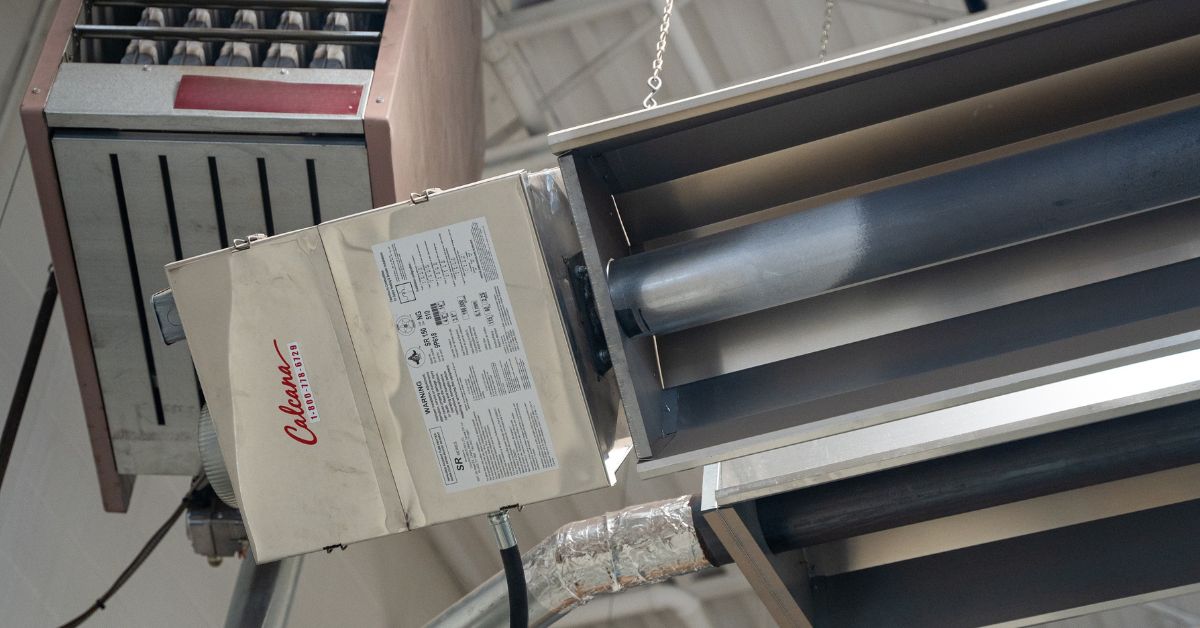
Calcana’s gas-powered infrared heaters are engineered specifically for demanding commercial and industrial environments, delivering reliable warmth while helping facilities reduce operational costs.
Mounted overhead systems provide powerful radiant heat without sacrificing valuable floor space, making them ideal for warehouses, manufacturing facilities, shipping areas, and large industrial buildings.
By focusing heat exactly where it is needed, Calcana infrared heaters help businesses improve comfort, reduce energy waste, and create more efficient working environments year-round.
When heating large warehouse spaces efficiently matters, infrared technology provides a smarter long-term solution.


Leave a comment
This site is protected by hCaptcha and the hCaptcha Privacy Policy and Terms of Service apply.