

Creating a comfortable enclosed patio is one of the most effective ways to extend your living or commercial space beyond the traditional indoor footprint. Whether it’s a residential sunroom, a covered deck, or a partially enclosed restaurant patio, these spaces offer the perfect balance between indoor comfort and outdoor atmosphere. However, maintaining a consistent and enjoyable temperature, especially during colder or windy conditions, can be a challenge without the right heating solution.
This is where infrared heaters stand apart. Designed for efficiency, performance, and long-term reliability, infrared heating systems are uniquely suited for enclosed patios because they operate differently from traditional heating methods. Instead of heating the air, they emit radiant energy that directly warms people, surfaces, and objects within their range. This targeted approach reduces energy waste, improves comfort, and delivers immediate results.
Understanding how to properly use infrared heaters in enclosed patios allows homeowners and business owners to maximize both comfort and efficiency. From selecting the right system to ensuring safe installation and optimizing performance, every detail plays a role in achieving the best results. This guide covers everything you need to know to confidently choose and operate an infrared heating system tailored to your enclosed patio space.
Why Infrared Heating Is Ideal for Enclosed Patios Year-Round Comfort & Relaxation
Enclosed patios occupy a unique middle ground between indoor and outdoor environments. While they offer protection from wind and precipitation, they are rarely as insulated or airtight as interior spaces. This makes traditional heating systems less effective, as warm air can easily escape or become unevenly distributed.
Infrared heaters address this challenge by bypassing the need to heat the air entirely. Instead, they emit electromagnetic waves that travel through the air and transfer heat directly to objects and people. This means that even if some air movement occurs within the space, the heat remains consistent and effective.
This method of heating creates a more stable and comfortable environment. Rather than experiencing fluctuating temperatures or cold drafts, occupants feel a steady, natural warmth similar to the sun’s rays. This is particularly valuable in enclosed patios where maintaining a consistent atmosphere is key to usability and enjoyment.
Additionally, infrared heating systems are well-suited for both residential and commercial applications. Homeowners benefit from extended patio use throughout the year, while businesses such as restaurants and cafés can maintain comfortable outdoor seating areas regardless of seasonal changes. The ability to reliably heat these transitional spaces makes infrared systems a practical and long-term solution.
Key Advantages of Infrared Heating for Enclosed Patios
One of the primary reasons infrared heaters are so widely used in enclosed patio settings is their ability to deliver consistent performance under varying conditions. Unlike conventional systems, which struggle in partially open environments, infrared heaters maintain their effectiveness regardless of airflow or external temperature shifts.
Quick Heat Delivery
One of the most noticeable benefits of infrared heating is the speed at which it operates. The moment the system is activated, radiant heat begins to emit and begins warming surfaces and occupants close to immediately. There is little delay or warm-up period required to bring the space to a comfortable temperature.
This immediate response is particularly valuable in enclosed patios, where usage may be intermittent. Instead of turning on a heater well in advance, users can activate the system as needed and experience near-instant comfort. This not only improves convenience but also reduces unnecessary energy consumption.
Because infrared heat is not reliant on air temperature, it remains effective even when doors are opened or when minor drafts are present. This ensures that the patio remains consistently warm without requiring constant adjustments or increased output.
Energy Efficiency & Cost Savings
Efficiency is one of the defining characteristics of infrared heating systems. By focusing energy directly on people and objects rather than the surrounding air, these systems minimize waste and maximize effectiveness. This targeted approach results in lower overall energy consumption compared to traditional heating methods.
In enclosed patios, this efficiency becomes even more apparent. Instead of attempting to heat the entire volume of air within the space, infrared heaters allow you to concentrate warmth in the areas that matter most. Seating zones, dining areas, and gathering spaces can all be heated individually, reducing the need to operate multiple high-output systems simultaneously.
Over time, this translates into measurable cost savings. Lower energy usage means reduced utility bills, while the durability of infrared systems contributes to lower maintenance and replacement costs. For both residential and commercial users, this combination of efficiency and longevity makes infrared heating a smart investment.
Quiet & Low-Maintenance Operation
Another significant advantage of infrared heaters is their quiet operation. Unlike forced-air systems that rely on fans, motors, and moving parts, infrared heaters operate quietly. This creates a more enjoyable environment, particularly in settings where ambiance is important.
In residential spaces, this means uninterrupted relaxation and conversation. In commercial environments, such as restaurants or hospitality venues, it enhances the overall guest experience by maintaining a calm and comfortable atmosphere.
Having fewer moving parts also contributes to reduced maintenance requirements. With fewer components subject to wear and tear, infrared heaters tend to have longer lifespans and require less frequent servicing. This reliability is especially valuable in enclosed patio applications, where consistent performance is essential.
Safety Considerations for Enclosed Patio Use
While infrared heaters are designed for safe operation, proper installation and usage are essential to ensure long-term reliability and prevent potential hazards. Enclosed patios present unique considerations due to their semi-contained nature, making it important to follow best practices for electrical safety, clearance, and ventilation.
Electrical Safety Requirements
Electrical safety should always be a top priority when installing and operating infrared heaters. Hardwired systems, in particular, require professional installation by a licensed electrician to ensure compliance with local codes and standards.
Ground fault circuit interrupter (GFCI) protection is highly recommended for outdoor and enclosed patio installations. These devices automatically shut off power in the event of an electrical fault, reducing the risk of shock or damage.
It is also important to regularly inspect all electrical components. Damaged wires, loose connections, or worn plugs should be addressed immediately to prevent further issues. Maintaining a clean and secure electrical setup not only protects the heater but also ensures safe operation for everyone using the space.
Proper Clearance Distances
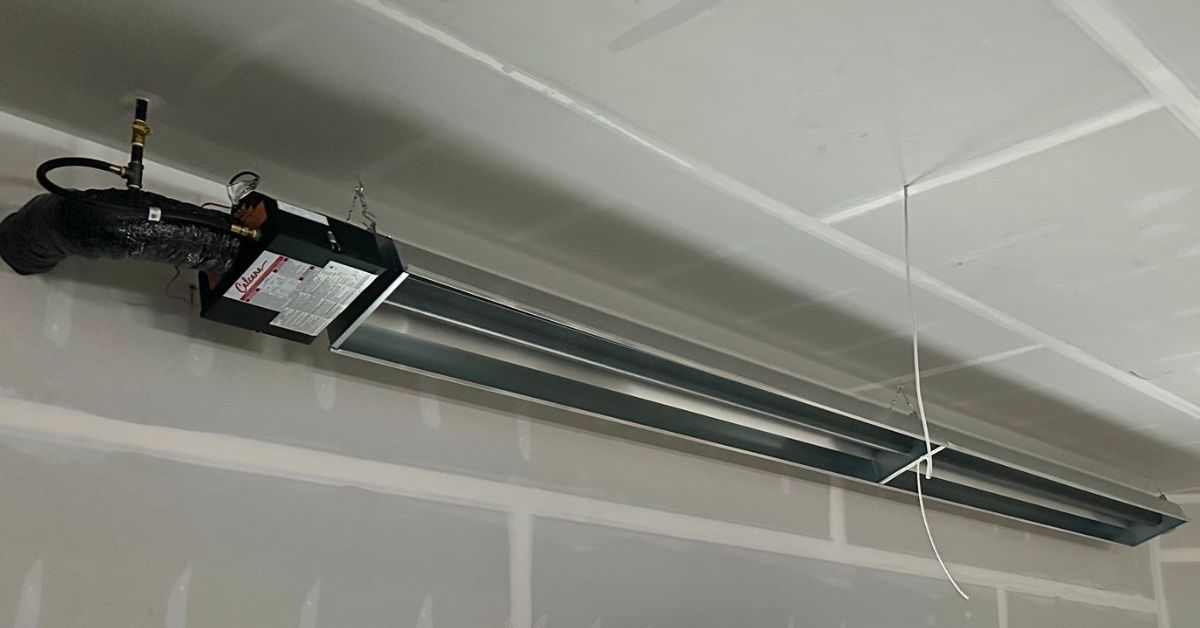
Infrared heaters generate high levels of heat, making proper clearance distances essential. Most systems require a minimum of three feet of clearance from combustible materials such as furniture, curtains, and structural elements. Calcana in particular has a clearance that goes even lower than that all the way down to 4" in some cases dependent on the model and material in the space.
Maintaining adequate spacing allows for proper heat distribution and reduces the risk of overheating nearby objects. It also ensures that occupants can move freely within the space without coming into contact with hot surfaces.
Because clearance requirements can vary depending on the heater model and output, it is important to follow manufacturer guidelines closely. Adhering to these specifications is key to both safety and performance.
Ventilation Considerations
Although enclosed patios offer protection from the elements, they still require adequate ventilation to maintain a comfortable and safe environment. Proper airflow helps regulate temperature and prevents heat from becoming trapped in confined areas.
Electric infrared heaters are particularly well-suited for enclosed patios because they do not produce combustion byproducts. Unlike gas-powered systems, they do not emit fumes or require additional ventilation for exhaust gases. This makes them a safer and more convenient option for semi-enclosed spaces.
Child & Pet Safety
Safety considerations should also account for children and pets. Infrared heaters can reach high surface temperatures, creating potential burn risks if touched.
Installing heaters at appropriate heights, typically at least eight feet above the ground, helps prevent accidental contact. Protective guards or screens can also be used to add an extra layer of safety without affecting performance.
By taking these precautions, you can ensure that your enclosed patio remains a safe and enjoyable space for everyone.
Choosing the Right Size & Power Output
Selecting the correct heater size is one of the most important steps in achieving optimal performance. An undersized unit may struggle to provide adequate warmth, while an oversized system can lead to unnecessary energy consumption.
Space Size & Layout
The first step in sizing a heater is determining the square footage of your enclosed patio. This provides a baseline for estimating the required power output.
However, layout and usage patterns are equally important. Areas with concentrated seating or activity may require more focused heating, while less frequently used spaces can operate with lower output.
Ceiling height also plays a role. Taller spaces require more energy to maintain consistent temperatures, as heat must travel a greater distance to reach occupants.
Insulation & Materials
The construction of your enclosed patio has a direct impact on heating efficiency. Well-insulated walls, double-pane windows, and sealed enclosures help retain heat, reducing the overall demand on your heating system.
Flooring materials also influence performance. Concrete and stone surfaces tend to absorb and retain heat, contributing to a more stable environment. In contrast, wood or tile may require slightly higher output to achieve the same level of comfort.
Understanding these factors allows you to select a heater that is properly matched to your space.
Climate & Usage Patterns
Local climate conditions should also be taken into account. Regions with milder temperatures may require less heating capacity, while colder climates demand higher-output systems.
Usage patterns are another important consideration. Occasional use during cooler evenings may require a different setup than all-day operation during winter months. Selecting a system that aligns with your specific needs ensures both comfort and efficiency.
Installation & Mounting Options
Proper installation is critical to achieving the best performance from your infrared heater. The way a heater is mounted and positioned affects both its effectiveness and safety.
Ceiling Mount Installation
Ceiling mounting is often the preferred option for enclosed patios. By positioning the heater overhead, heat can be distributed evenly across the space while keeping the unit out of reach.
This approach also minimizes visual clutter and preserves the overall design of the patio. With the heater mounted above, there is more flexibility in arranging furniture and other elements.
Wall Mount Configurations
Wall-mounted heaters provide an alternative solution for spaces where ceiling installation is not feasible. These systems can be angled to direct heat toward specific areas, allowing for more targeted coverage.
Adjustable mounting brackets make it easy to fine-tune the direction of heat, ensuring that it reaches the areas where it is needed most.
Maximizing Performance & Comfort
Once your system is installed, optimizing its performance is key to getting the most out of your investment. Simple adjustments in placement, usage, and maintenance can make a significant difference in overall effectiveness.
Positioning heaters to cover primary seating areas ensures that heat is delivered where it matters most. Using multiple units to create zones allows for greater control and flexibility.
Regular cleaning and inspection help maintain efficiency and prevent issues from developing over time. Keeping the system in good condition ensures consistent performance and extends its lifespan.
Final Thoughts
Infrared heaters offer a powerful, efficient, and reliable solution for enclosed patio heating. By understanding how these systems work and taking the time to select and install the right unit, you can transform your patio into a comfortable, year-round space.
Whether for residential enjoyment or commercial use, the benefits of infrared heating are clear. From quick warmth and energy efficiency to quiet operation and long-term durability, these systems provide a level of performance that traditional heaters simply cannot match.
Explore Infrared Heating Solutions
If you’re ready to upgrade your enclosed patio, choosing a high-quality infrared heater is the first step. Calcana’s systems are designed for performance, durability, and ease of installation, making them an ideal choice for both homeowners and businesses.
With the right setup, you can enjoy a comfortable, efficient, and inviting outdoor space in any season.

Leave a comment
This site is protected by hCaptcha and the hCaptcha Privacy Policy and Terms of Service apply.