
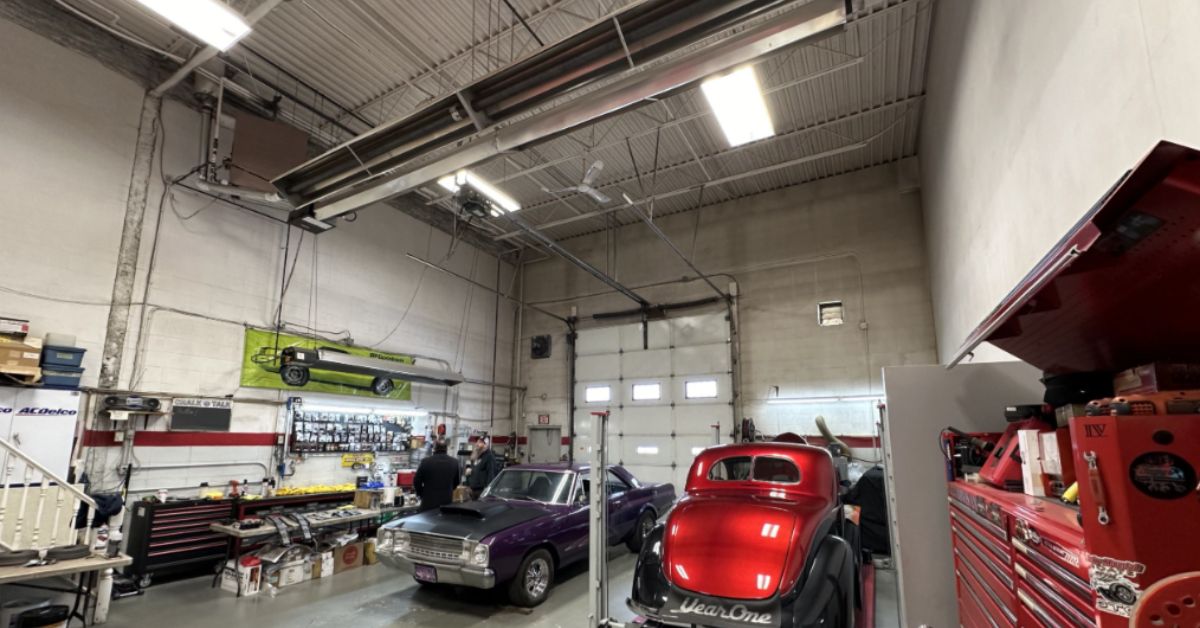
Whether you’ve turned your garage into a hobby room, a home gym, a woodworking shop, an automotive workspace, or you use it as a professional workshop, one thing is certain: garages get cold. Very cold.
Unlike the rest of your home, garages are rarely designed as conditioned living spaces. They typically lack full insulation, HVAC ductwork, or proper air sealing. The result? A large, drafty space that traps cold air during the winter and becomes uncomfortable, sometimes unusable, for months at a time.
The bigger the garage, the harder and more expensive it becomes to heat using traditional systems. Forced-air heaters struggle to keep up. Space heaters run constantly. Utility bills climb. And comfort still feels out of reach.
But there’s a smarter solution.
If you’re looking for an efficient, cost-effective way to heat your garage without excessive electricity usage or turning the space into a stuffy oven, installing an infrared heater may be the best decision you make this winter.
This guide explains exactly why infrared heating is ideal for garages, and how it can completely transform the way you use your space.
Why Heating a Garage Is So Challenging & Why Traditional Systems Fall Short
Before diving into solutions, it’s important to understand the problem.
Garages present several heating challenges:
-
Minimal insulation in walls and ceilings
-
Large overhead doors that leak cold air
-
Concrete floors that absorb and retain cold
-
High ceilings (in many modern builds)
-
Frequent door openings
-
Drafts around framing and joints
Traditional heating systems warm the air. But in a garage, warm air rises quickly toward the ceiling, leaving you standing in a cold zone near the floor.
That’s not just uncomfortable. It’s inefficient.
Heating the air in a drafty garage is like trying to heat the outdoors. The system works harder, runs longer, and costs more.
This is where infrared heating changes everything.
Efficient & Targeted Infrared Heating
Infrared heaters work differently from conventional systems.
Instead of heating the air, infrared heaters emit radiant heat that warms objects, surfaces, tools, floors, and people directly. Think of how the sun warms your skin on a cold day, even if the air temperature is low.
This radiant energy is absorbed by:
-
Walls
-
Concrete floors
-
Workbenches
-
Vehicles
-
Tools and machinery
-
Your body
Once those objects warm up, they re-radiate heat back into the space, creating a consistent and comfortable environment.
Why This Matters in a Garage
Garages lose air heat quickly. But they don’t lose radiant heat the same way.
Because infrared heating doesn’t rely on circulating air:
-
Drafts don’t eliminate the warmth
-
Open doors don’t immediately undo heating progress
-
Heat stays where you’re working
Instead of wasting energy trying to heat the entire volume of cold air, infrared heaters focus warmth exactly where it’s needed.
That’s precision heating, and that’s efficiency.
Consistent Warmth in Lightly Insulated Spaces
Most garages are lightly insulated at best.
Even if your walls have some insulation, garage doors are often thin, and concrete floors remain uninsulated. Traditional heaters struggle in these environments because the warm air they produce escapes too quickly.
Infrared heaters excel in lightly insulated garages because they:
-
Heat surfaces directly
-
Warm concrete floors
-
Reduce cold radiation from walls
-
Create stable comfort zones
When the physical materials in your garage absorb radiant heat, they stop feeling icy and begin contributing to overall warmth.
This is especially important for:
-
Woodworking shops
-
Automotive garages
-
Metal fabrication spaces
-
Hobby rooms
-
Home gyms
You can’t focus on your next project when your hands are numb. Infrared heating eliminates that distraction.
Quick Warm-Up Time
One of the most common frustrations with garage heating is waiting.
With traditional systems, you may need to:
-
Turn the heater on 20–30 minutes before entering
-
Wait for air to circulate
-
Deal with cold floors even after air warms
Infrared heaters provide near-instant comfort.
Because they warm objects directly, you feel heat almost immediately after startup. That means:
-
No long preheating periods
-
No wasted energy heating empty space
-
Immediate comfort when you walk in
If you use your garage intermittently, evenings, weekends, short work sessions, this rapid response makes a major difference.
Energy Savings That Add Up
Energy efficiency is one of the biggest reasons homeowners choose infrared heaters for garages.
Here’s why they save money:
1. Targeted Heating
You heat only the area you use, not the entire air volume.
2. Reduced Heat Loss
Radiant heat isn’t blown away by drafts.
3. Faster Warm-Up
Less runtime means lower energy use.
4. Lower Operating Costs
High-efficiency gas infrared heaters can reduce long-term heating expenses compared to electric space heaters or forced-air systems.
For large garages especially, the energy savings can be significant over a full winter season.
Quiet Operation for Focused Work
Garages are often used for detailed, concentration-heavy tasks:
-
Fine woodworking
-
Mechanical repairs
-
Welding
-
Painting
-
Fitness training
Traditional heaters often include:
-
Loud fans
-
Rattling ducts
-
Air movement noise
Infrared heaters operate quietly because they do not rely on fans or blowers to distribute heat.
That means:
-
No loud air bursts
-
No distractions
Just steady, quiet warmth.
Improved Indoor Air Quality
In workshops and garages, air quality matters.
Many forced-air heaters circulate:
-
Sawdust
-
Metal shavings
-
Dust
-
Allergens
This can create breathing issues and discomfort, especially for those with allergies or respiratory sensitivities.
Infrared heaters don’t blow air. They don’t circulate particles. They don’t rely on duct systems that accumulate debris.
The result:
-
Cleaner air
-
Less dust disturbance
-
Healthier work environment
For woodworking shops or automotive garages, this benefit alone is significant.
Reduced Moisture & Condensation
Cold concrete floors and metal surfaces attract condensation.
Moisture buildup can cause:
-
Rusted tools
-
Corroded machinery
-
Mold growth
-
Structural damage
Infrared heating warms those surfaces directly, reducing temperature differentials that cause condensation.
When walls, floors, and tools stay warmer:
-
Moisture levels decrease
-
Equipment lasts longer
-
Mold risks are reduced
For anyone storing valuable equipment, this is critical.
Low Maintenance & Long Lifespan
Infrared heaters are mechanically simple.
Because they:
-
Don’t rely on complex ductwork
-
Don’t include high-friction moving parts
-
Don’t use blowers in the same way forced-air systems do
They experience less wear and tear.
Maintenance typically includes:
-
Occasional surface cleaning
-
Annual inspection
-
Checking combustion intake and exhaust (for gas models)
That’s it.
No constant filter replacements. No duct cleaning. No fan motor failures.
Over time, that simplicity translates into long-term reliability.
Cost-Effective Garage Heating Solution
When comparing total cost of ownership, infrared heating often wins.
Consider:
-
Lower operating costs
-
Minimal maintenance expenses
-
Reduced repair frequency
-
Longer equipment lifespan
-
Improved energy efficiency
For homeowners looking to heat a garage workshop without dramatically increasing monthly bills, infrared heating provides a balanced, dependable solution.
Ideal Garage Uses for Infrared Heating
Infrared heaters are especially effective for:
Home Workshops
Consistent warmth without dust disturbance.
Automotive Garages
Comfortable conditions for repairs and detailing.
Home Gyms
Radiant warmth that doesn’t create stuffy air.
Hobby Rooms
Perfect for crafting, model building, or art.
Storage Spaces
Reduced condensation and equipment protection.
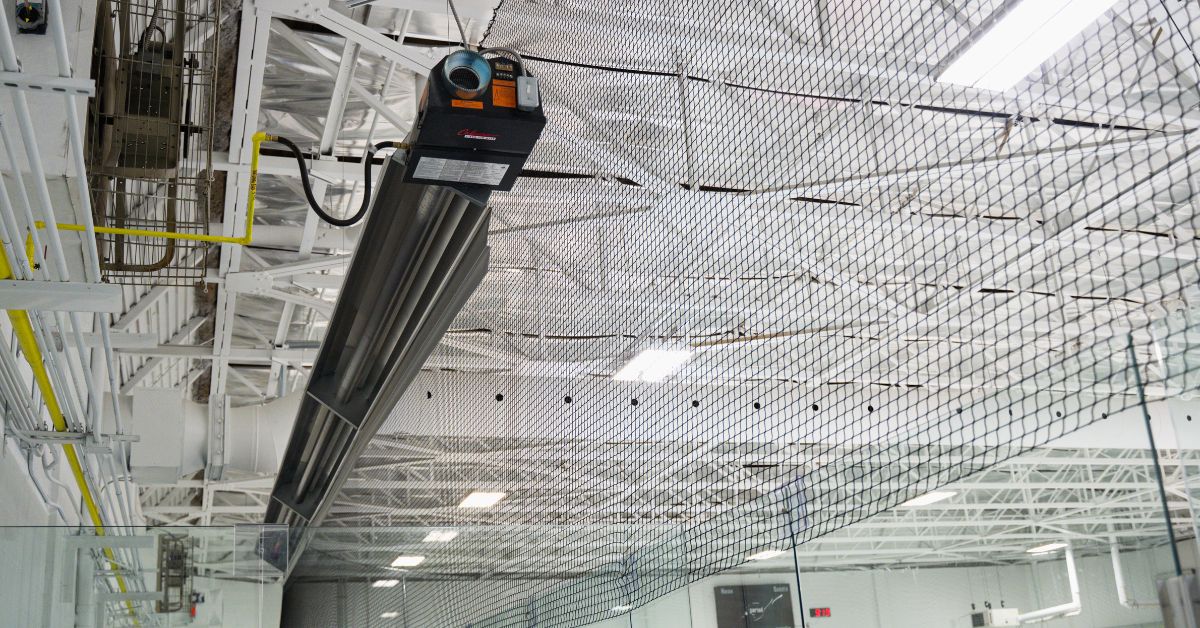
Wall-Mounted & Ceiling-Mounted Advantages
Modern infrared garage heaters can be:
-
Ceiling-mounted
-
Wall-mounted
This keeps floor space clear and safe.
No bulky portable units.
No trip hazards.
No cords across the floor.
For active work environments, that matters.
Comparing Infrared vs. Forced-Air Garage Heating
| Feature | Infrared Heating | Forced-Air Heating |
|---|---|---|
| Heats Air | No | Yes |
| Affected by Drafts | Minimal | High |
| Warm-Up Time | Fast | Slower |
| Noise Level | Quiet | Moderate to Loud |
| Dust Circulation | Low | High |
| Energy Efficiency | High | Moderate |
The difference becomes especially clear in large or poorly insulated garages.
Choosing the Right Infrared Heater for Your Garage
When selecting a garage infrared heater, consider:
-
Garage square footage
-
Ceiling height
-
Insulation level
-
Fuel type (electric vs. gas)
-
Mounting location
-
Primary use of space
For larger residential garages or professional workshops, high-efficiency gas infrared heaters often provide superior long-term value and heating power.
Installation Considerations
Professional installation ensures:
-
Proper mounting height
-
Safe clearance distances
-
Correct fuel connections (for gas models)
-
Optimal heater positioning
Strategic placement maximizes heat coverage and comfort.
Year-Round Usability
Heating your garage isn’t just about comfort, it’s about unlocking potential.
With reliable warmth, your garage becomes:
-
A year-round workspace
-
A consistent training space
-
A productive environment
-
A protected storage area
Instead of shutting down projects during winter, you maintain full functionality.
The Long-Term Value of Infrared Garage Heating
Over time, infrared heating delivers value through:
-
Lower utility bills
-
Reduced maintenance
-
Increased property usability
-
Equipment protection
-
Improved comfort
It transforms the garage from a cold storage box into a functional extension of your home.
Final Thoughts: Upgrade Your Garage Comfort
Your garage has more potential than you think. It can be more than a cold storage space for vehicles and tools. It can be a fully functional workshop, a productive business space, a year-round home gym, or a comfortable hobby room, but only if it’s heated properly.
Trying to force a traditional heating system to work in a garage often leads to frustration. The space never quite feels warm enough. The heater runs constantly. Energy costs rise. Cold drafts return the moment the door opens. Over time, that inefficiency discourages you from using the space at all during colder months.
Infrared heating changes that equation.
By warming surfaces, equipment, and people directly, infrared heaters create stable, lasting comfort that holds up even in drafty or lightly insulated garages. Instead of fighting the structure of the building, radiant heat works with it, turning cold concrete floors, walls, and tools into heat-retaining surfaces that contribute to overall warmth.
Upgrading your garage comfort isn’t just about temperature. It’s about usability. It’s about productivity. It’s about protecting your equipment from condensation and rust. And it’s about making sure your space works for you all year long.
When you invest in the right heating solution, you’re not just warming a garage, you’re unlocking the full potential of your property. With efficient, targeted infrared heating, your garage becomes a dependable extension of your home or business, no matter how low the temperatures drop outside.

Leave a comment
This site is protected by hCaptcha and the hCaptcha Privacy Policy and Terms of Service apply.