

When it comes to creating a comfortable, energy-efficient indoor or outdoor environment, the type of heating system you choose makes a significant difference in performance, operating costs, and long-term reliability. Across commercial and industrial sectors, more businesses are turning to infrared heaters as a smarter alternative to traditional forced-air systems.
Unlike conventional heating methods that warm the air first, infrared heating works by delivering radiant heat directly to people, surfaces, and equipment. This targeted heating approach reduces wasted energy, performs better in open or high-ceiling spaces, and maintains comfort even in drafty or partially exposed environments.
From manufacturing plants and warehouses to hospitality patios, automotive service centers, fitness facilities, and construction sites, infrared heating systems have become a preferred solution for industries that demand efficiency, durability, and performance.
In this comprehensive guide, we’ll explore:
-
How infrared heating works in commercial and industrial settings
-
Why radiant heat outperforms traditional systems in large spaces
-
The industries that benefit most from installing infrared heaters
-
How mounted infrared heaters improve safety, productivity, and ROI
-
Why businesses are switching to high-efficiency gas-fired radiant systems
If you're evaluating heating solutions for your facility, this guide will help you understand whether infrared heating is the right investment.
How Calcana Infrared Heating Works in Commercial & Industrial Applications
Before diving into industry-specific benefits, it’s important to understand the science behind infrared heating systems.
Infrared heaters emit radiant energy in the form of electromagnetic waves. When this energy comes into contact with solid surfaces, floors, machinery, equipment, people, seating areas, it is absorbed and converted into heat. Those surfaces then re-radiate warmth evenly throughout the space.
This differs dramatically from forced-air heating, which:
-
Heats the air first
-
Relies on air circulation
-
Loses heat through stratification (warm air rising to the ceiling)
-
Struggles in drafty or open environments
In large commercial buildings with high ceilings, forced air systems waste substantial energy heating unused overhead air space. Infrared heating avoids this entirely by focusing warmth exactly where it’s needed, at ground level.
For industries operating in expansive facilities, loading docks, semi-outdoor environments, or open layouts, this distinction is critical.
Why Infrared Is Ideal for Large Challenging Spaces
Many industries operate in buildings that are inherently difficult to heat:
-
High ceilings
-
Poor insulation
-
Frequent door openings
-
Large open floor plans
-
Indoor-outdoor transitions
Traditional systems often overwork to compensate, driving up fuel costs while still failing to maintain consistent comfort.
Infrared heaters solve these challenges because:
-
Heat is not blown away by air movement
-
Warmth is not lost through air stratification
-
Heating zones can be targeted
-
Energy use is reduced
-
Warm-up times are faster
For businesses focused on cost control, operational efficiency, and employee comfort, radiant heat provides measurable performance improvements.
Manufacturing & Warehousing Facilities
The Heating Challenge
Manufacturing plants and warehouses are some of the most difficult commercial environments to heat effectively. These facilities typically feature:
-
High ceilings (20–40+ feet)
-
Large overhead doors
-
Constant equipment movement
-
Wide open layouts
-
Concrete floors that absorb cold
Heating all of the air in these spaces using traditional forced air systems is both inefficient and costly.
Why Infrared Heaters Excel
Infrared heating systems are particularly effective in manufacturing and warehousing because they:
-
Directly warm workers, machinery, and floors
-
Maintain comfort even when dock doors open
-
Reduce energy loss from air stratification
-
Provide zone heating for active work areas
-
Operate quietly without airflow disruption
Employees working on assembly lines or loading docks feel warmth almost immediately because the radiant energy heats them directly.
Productivity & Morale Impact
Worker comfort directly impacts:
-
Productivity
-
Focus
-
Safety
-
Absenteeism
When employees aren’t distracted by cold temperatures, they perform more efficiently and safely.
Energy Savings
Infrared systems can reduce fuel consumption by 30–40% compared to conventional heating equipment in large facilities, particularly when zone heating strategies are implemented.
Hospitality & Tourism Industry
Extending Outdoor Revenue
Restaurants, hotels, resorts, rooftop lounges, and event venues rely heavily on guest comfort. Outdoor spaces are revenue-generating assets, but only if guests feel comfortable using them.
Infrared heaters allow hospitality businesses to:
-
Extend patio seasons
-
Maintain comfort in semi-enclosed spaces
-
Increase table turnover
-
Host events year-round
-
Improve guest satisfaction
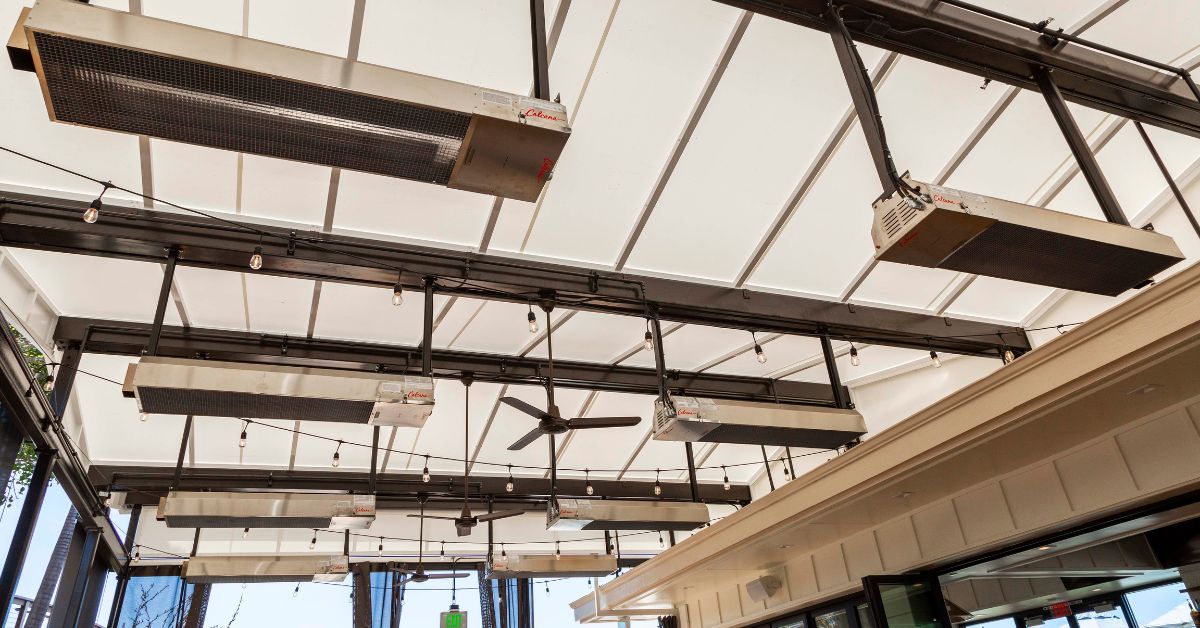
Unlike portable heaters, permanently mounted infrared systems provide consistent, reliable coverage without cluttering the floor.
Why Radiant Heat Works Outdoors
Because infrared heat warms people directly rather than the air, wind does not “blow away” the warmth the same way it disperses forced air systems.
Guests feel consistent, sun-like warmth even on cool evenings.
Brand Experience & Aesthetic Appeal
Mounted stainless steel infrared heaters blend seamlessly into hospitality environments. Sleek designs enhance aesthetics while remaining unobtrusive.
For upscale establishments, design matters, and mounted radiant heaters maintain ambiance while delivering performance.
Retail & Commercial Spaces
Retail stores, open-air markets, and commercial showrooms often struggle to maintain comfort near entryways and open spaces.
Infrared heaters offer:
-
Targeted warmth at entrances
-
Improved comfort in open layouts
-
Better energy efficiency in high-traffic areas
-
Queit operation
-
Reduced HVAC strain
Comfortable customers stay longer. Longer visits often lead to increased spending.
For businesses competing in challenging retail markets, comfort can become a differentiator.
Automotive Industry
Automotive manufacturing plants and service garages benefit tremendously from infrared heating systems.
Service Garages
Mechanics working in cold garages face:
-
Open bay doors
-
Concrete floors
-
Metal surfaces that retain cold
Infrared heaters warm:
-
Vehicles
-
Tools
-
Equipment
-
Technicians
This creates a more comfortable and efficient work environment.
Paint & Production Facilities
Infrared heating supports temperature stability in production environments where consistency matters.
Operational Benefits
-
Lower fuel costs
-
Reduced downtime
-
Improved worker satisfaction
-
Faster warm-up times
Sports & Fitness Centers
Large gymnasiums, indoor sports complexes, and fitness facilities often have:
-
High ceilings
-
Large open spaces
-
Variable occupancy
Infrared heaters provide:
-
Even heat distribution
-
Queit operation
-
Zone heating capability
-
Improved comfort for athletes
For yoga studios and fitness classes, the absence of loud fans preserves focus and ambiance.
Energy efficiency also supports sustainability initiatives many facilities now prioritize.
Construction Industry
Construction sites frequently operate in:
-
Unfinished buildings
-
Drafty structures
-
Temporary enclosures
Infrared heaters provide effective heating because:
-
They are not impacted by air movement
-
They warm workers directly
-
They operate efficiently in open environments
By maintaining worker comfort, construction projects experience:
-
Improved morale
-
Fewer weather-related delays
-
Increased productivity
Event & Entertainment Industry
Concert venues, outdoor stages, wedding venues, and event spaces rely on guest comfort to ensure positive experiences.
Infrared heaters provide:
-
Targeted warmth without airflow noise
-
Reliable heat in semi-open environments
-
Sleek mounting options
-
Year-round event capability
Queit operation is critical for performance environments where noise disruption is unacceptable.
Education & Public Facilities
Schools, libraries, community centers, and recreational facilities often include:
-
Multi-purpose halls
-
Open gymnasiums
-
Outdoor courtyards
-
Entry vestibules
Infrared heaters offer:
-
Quiet operation
-
Targeted heating zones
-
Reduced energy waste
-
Increased occupant comfort
Because radiant heating does not circulate air, it may also reduce dust movement in sensitive environments.
Logistics & Distribution Centers
Distribution hubs share many challenges with warehouses:
-
Large square footage
-
High ceilings
-
Frequent door openings
-
Loading dock exposure
Infrared heaters improve:
-
Worker comfort
-
Inventory protection
-
Energy efficiency
-
Zone-based heating strategies
By heating only active areas, facilities avoid wasting energy on unused space.
Agricultural Applications
Agricultural buildings such as barns, greenhouses, and processing facilities also benefit from radiant heating.
Infrared heaters can:
-
Warm livestock areas efficiently
-
Maintain stable temperatures
-
Operate in dusty environments
-
Resist moisture when properly sealed
Durability and minimal maintenance are critical in agricultural settings.
Why Mounted Infrared Heaters Outperform Portable Options
While portable heaters may seem convenient, they present several drawbacks:
-
Floor clutter
-
Safety risks
-
Inconsistent coverage
-
Limited heating range
Mounted infrared systems:
-
Free up floor space
-
Provide consistent zone coverage
-
Enhance safety
-
Offer professional installation solutions
For commercial and industrial applications, permanent systems outperform temporary equipment.
Energy Efficiency & Long-Term Cost Savings
One of the strongest reasons industries invest in infrared heating is measurable fuel savings.
Infrared systems:
-
Convert fuel directly into radiant heat
-
Reduce heat loss from air movement
-
Eliminate air stratification
-
Support zone-based heating strategies
Many businesses report 30–40% fuel savings compared to conventional systems.
Over time, these savings significantly offset installation costs.
Maintenance & Durability
Infrared heaters are engineered with fewer moving parts than forced air systems.
Benefits include:
-
Lower maintenance requirements
-
Reduced repair frequency
-
Long operational lifespan
-
Dust- and moisture-resistant sealed burner boxes
For industrial facilities, durability is essential.
Safety & Compliance
Commercial-grade infrared heaters are:
-
Certified to CSA and AGA standards
-
Designed with sealed burner systems
-
Built for industrial reliability
-
Installed according to clearance guidelines
Mounted systems eliminate tripping hazards common with floor heaters.
Why Industries Are Switching to Infrared Heating
Across sectors, businesses prioritize:
-
Operational efficiency
-
Employee comfort
-
Energy cost control
-
Sustainability goals
-
Extended usability of space
Infrared heating supports all of these objectives simultaneously.
As energy costs continue rising, targeted heating becomes increasingly attractive.
The Long-Term ROI of Infrared Heating Systems
When evaluating heating investments, industries consider:
-
Installation cost
-
Fuel savings
-
Maintenance reduction
-
Productivity improvements
-
Revenue extension (for hospitality)
Infrared heating consistently delivers strong long-term return on investment.
Why Businesses Choose Calcana Infrared Heaters
Calcana Industries has been manufacturing gas-fired, low-intensity infrared heating systems since 1988. Designed for commercial, industrial, agricultural, and hospitality applications, Calcana heaters are engineered for:
-
High efficiency
-
Larger reflector than industry standard
-
Low voltage controls
-
Sealed burner box design
-
30–40% fuel savings over conventional systems
-
Natural Gas or Propane compatibility
Mounted designs provide clean, streamlined heating solutions without clutter.
With layout design services, heat-loss analysis, and factory support, businesses receive comprehensive guidance from planning through installation.
Final Thoughts: Is Infrared Heating Right for Your Industry?
Infrared heaters are not just an alternative heating option, they are a strategic operational upgrade for many industries.
From manufacturing plants and warehouses to hospitality patios and automotive service centers, radiant heat delivers:
-
Targeted warmth
-
Reduced fuel costs
-
Improved employee comfort
-
Greater energy efficiency
-
Long-term durability
As industries continue seeking smarter, more efficient heating solutions, infrared technology stands out as a proven, reliable choice.
If your facility struggles with high ceilings, drafty layouts, or rising energy costs, it may be time to consider whether infrared heating is the solution that transforms both comfort and performance.
With the right system design and professional installation, industries across sectors can create safer, more efficient, and more comfortable environments, year-round.

Leave a comment
This site is protected by hCaptcha and the hCaptcha Privacy Policy and Terms of Service apply.